Information Centre · Probate & Deceased Estates

When Does a Deceased Estate End for Tax Purposes?

A practical Australian guide for executors, beneficiaries, accountants and advisers on the question that quietly drives most deceased-estate tax disputes: when does the estate end for tax purposes? This guide explains the difference between estate administration continuing and the estate being fully administered for tax, the present entitlement test, the administration period, the ATO's guidance, CGT, testamentary trusts, delays, ongoing litigation, rental properties and share portfolios — and the executor mistakes we see most often. General information only — not taxation advice.

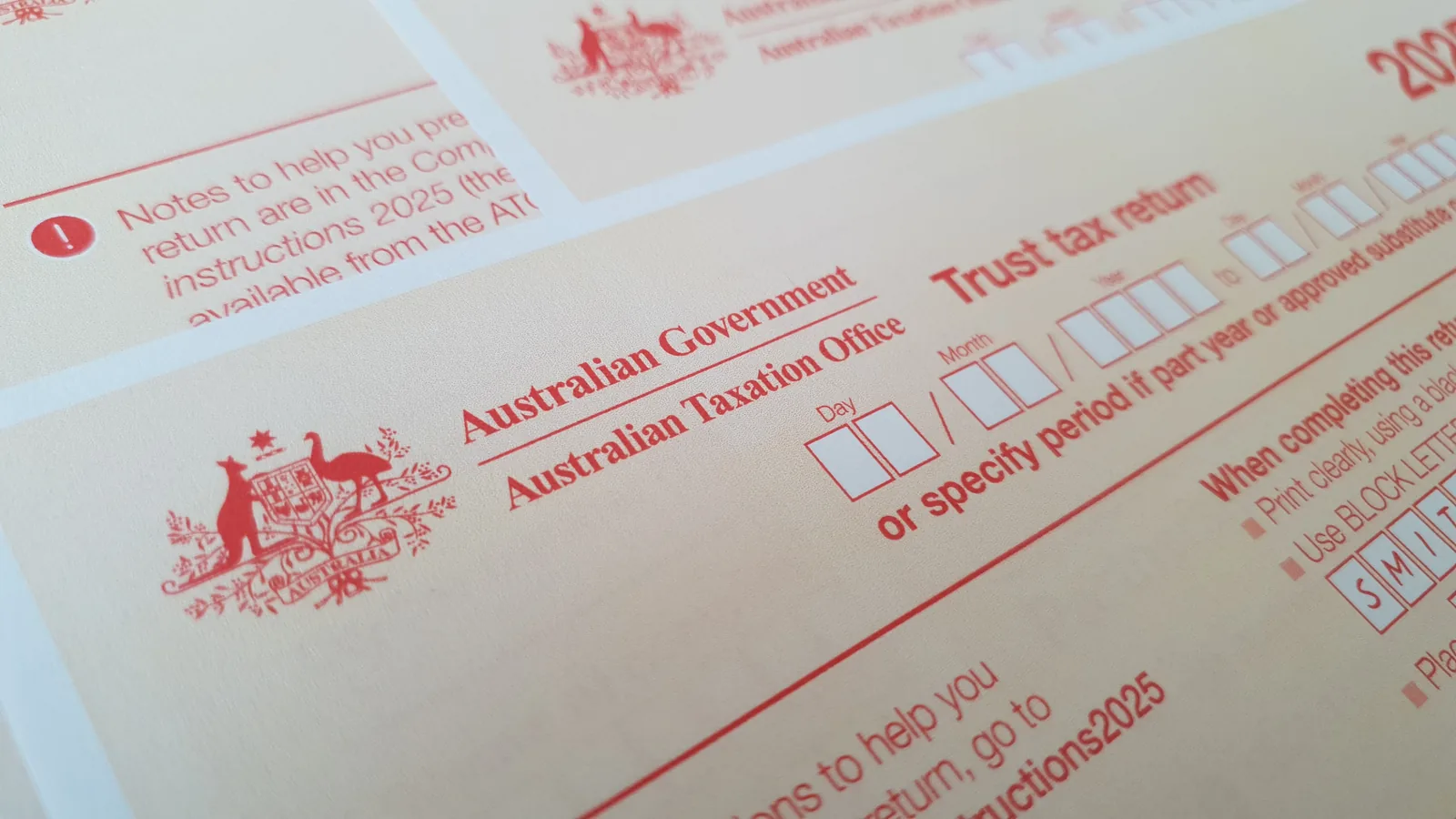
Australian Taxation Office trust tax return form illustrating the taxation treatment of deceased estates and estate administration in Australia.
By Parke Lawyers Editorial TeamReviewed by JIM PARKE, Lawyer & Chartered AccountantLast reviewed

Key points

  • An estate can be fully administered for tax purposes before the legal administration is finalised — the two concepts are distinct.
  • The administration period runs from the date of death to the date the residue is ascertained and beneficiaries become presently entitled.
  • Once beneficiaries are presently entitled to estate income, that income is taxed in their hands, not the trustee's.
  • Ongoing litigation, unsold rental properties, share portfolios and unrealised CGT assets can extend the administration period — sometimes by years.
  • A testamentary trust created by the will is a separate trust that continues after the estate itself has ended for tax purposes.
  • Executors should obtain accounting advice on when to switch from estate returns to beneficiary or trustee returns — getting it wrong triggers s99A penalty rates.

Most executors think of a deceased estate as a single process that begins at death and ends when the final distribution cheque clears. From a taxation perspective, the picture is more nuanced. An estate has a distinct end point for income tax purposes — the date it is "fully administered" — and that point is usually reached well before the legal administration is finally wrapped up. Identifying it correctly governs who is taxed on each dollar of estate income, which tax rates apply, which sections of the Income Tax Assessment Act drive the assessment, and whether the estate quietly slips into the 47% penalty rate in section 99A.

This article explains, in plain language, how to identify the point at which the estate ends for tax purposes, why that point may be very different from the date the estate is legally wound up, and how ongoing realisation, rental properties, share portfolios, litigation and testamentary trusts interact with the tax-end question. It is written for executors, beneficiaries, accountants and advisers, and it is general information only — not taxation advice.

Why the Question Matters

The question matters because Australian income tax law treats a deceased estate as a separate taxable entity only while it is being administered. The executor (as the legal personal representative) is the taxpayer on estate income during that period. Once the estate is fully administered, the entity that pays tax on each dollar of estate income changes — to the residuary beneficiaries (if presently entitled), to the trustee of a testamentary trust (if the will creates one), or to the executor as bare trustee for an identified beneficiary. Getting the change-over point wrong misallocates years of income, triggers amended assessments and can attract penalties and interest.

The question also matters because section 99A — which taxes accumulated estate income at the top marginal rate of 45% plus Medicare — is the default tax outcome if no beneficiary is presently entitled and the Commissioner is not satisfied that section 99 (with individual marginal rates and the tax-free threshold) should apply. The longer an estate runs without ascertaining its residue, the more likely the Commissioner is to question why income is being accumulated and the more exposed the executor becomes. See our article on who pays tax on estate income in Australia for the underlying sections-97-to-99A framework, and our article on when an estate income tax return is required for the lodgement threshold questions.

Estate Administration vs Estate Taxation

Estate administration is the practical and legal process of collecting in the deceased's assets, paying debts, taxes, funeral and administration expenses, paying legacies, attending to any litigation, ascertaining the residue, distributing the residue and obtaining the executor's discharge. The administration continues until the last asset has been transferred or sold, the last distribution paid, the final accounts signed off and the executor's role concluded.

Estate taxation, by contrast, treats the estate as a trust for income tax purposes. The estate is a separate taxable entity from the date of death until it is fully administered — that is, until the point at which the residue is ascertained and the residuary beneficiaries are presently entitled. From that point onwards, the estate ceases to be a separate taxable entity in substance. The executor may continue to hold assets, sign contracts, transfer titles, manage tenants and instruct stockbrokers, but does so as a bare trustee for the now-identified beneficiaries.

The two concepts overlap, but they are not the same and they do not finish on the same day. The estate's tax-end date is almost always earlier than the administration-end date. Executors who treat them as interchangeable end up either (a) over-reporting income in the estate (and paying tax at trustee rates that should have been paid by the beneficiary at lower individual rates) or (b) under-reporting and exposing beneficiaries to amended assessments.

The Legal Personal Representative

For tax purposes, the executor (or court-appointed administrator) is the "legal personal representative" (LPR) of the deceased. The LPR has two distinct tax roles during the administration period: first, to lodge the deceased's final personal income tax return for the period from 1 July to the date of death; second, to lodge the estate's trust tax return (form TRT) for each year of administration. The LPR's personal liability for those returns continues even after the estate is wound up — unsuccessful executors have been pursued by the ATO years after final distribution for unpaid estate tax. Obtaining a tax clearance position before final distribution is a standard part of careful administration.

The LPR's broader fiduciary duties (collecting in assets, paying debts, accounting to beneficiaries) are covered in our companion articles on executor duties in Victoria and beneficiary rights during estate administration.

Estate Income Tax Returns

The estate lodges a trust tax return for each year of administration in which it derives assessable income or holds CGT assets that produce a CGT event. The return uses the estate's own TFN (not the deceased's). It reports estate income (interest, rent, dividends, distributions from managed funds, business income, capital gains), the deductions properly attributable to estate income, the net income calculation, and the allocation of income between beneficiaries who are presently entitled and amounts assessed to the trustee under section 98, 99 or 99A.

In the year the estate becomes fully administered, the estate lodges a final TRT covering the period from 1 July to the date the residue was ascertained. Subsequent income produced by assets still standing in the executor's name is reported in the beneficiaries' (or testamentary trust's) returns, not the estate's. For more detail on lodgement, thresholds and the "return not necessary" advice, see our article on when an estate income tax return is required.

Beneficiary Taxation

Once the estate is fully administered, the residuary beneficiaries are taxed on their share of estate income in their own returns under section 97 of the Income Tax Assessment Act 1936 (Cth). They include their share of net income (whether received or not), their share of franking credits, and their share of any capital gains streamed to them under the trust streaming rules. Beneficiaries should expect to receive an annual distribution statement from the executor identifying the components of the distribution and the franking credits attached.

Where a residuary beneficiary is under a legal disability (a minor or an incapacitated adult), the trustee is assessed on the beneficiary's share under section 98, at the rates that would apply to the beneficiary. Where a beneficiary refuses or is unable to be located, the trustee is assessed under section 99 or 99A on that share. These are not theoretical concerns — they arise routinely in family estates with minor grandchildren or overseas beneficiaries.

The Administration Period

The administration period is the period during which the estate exists as a separate taxable trust. It begins at the date of death and ends when the estate is fully administered for tax purposes. The Commissioner's published practice (PS LA 2003/12) accepts that during the early years of administration — typically the first three income years — section 99 applies as a matter of course, so the trustee is assessed at individual marginal rates with the tax-free threshold available. After three years, the Commissioner expects the executor to be able to explain why administration is still incomplete; if not, section 99A may apply, taxing accumulated estate income at the top marginal rate of 47% (including Medicare).

For most well-managed estates the administration period runs for between one and three income years. It is longer where the will creates a life interest, where the residue includes a business or pre-CGT assets that take time to deal with, where the estate is involved in TFM family-provision litigation, or where overseas assets or overseas beneficiaries complicate the realisation.

Present Entitlement Concepts

Present entitlement is the central concept that decides when the estate ends for tax purposes. A beneficiary is presently entitled to income when they have an immediate and indefeasible right to demand payment of that income from the trustee. During administration, the residuary beneficiaries are not presently entitled to the residue — they have only an expectancy. The High Court's decisions in Commissioner of Stamp Duties (Qld) v Livingston [1965] AC 694 and Federal Commissioner of Taxation v Whiting (1943) 68 CLR 199 establish that a residuary beneficiary's interest crystallises only when the residue is ascertained.

The residue is ascertained when the executor has paid (or properly provided for) all debts, taxes, funeral and administration expenses and pecuniary legacies, and can therefore identify the assets that remain to be distributed to the residuary beneficiaries. "Provided for" includes setting aside a reasonable contingency for known but unliquidated claims (for example, a contested invoice or a foreshadowed CGT liability on a future sale). The executor's resolution recording the ascertainment of the residue is the best practical evidence of the tax-end date.

Estate Distributions

Distributions of estate corpus (assets or money representing the residue) are not assessable income of the beneficiary in their own hands — they are inherited capital. Distributions of estate income (interest, rent, dividends, capital gains) carry their character through to the beneficiary under the streaming rules and are assessable in the beneficiary's hands. Once the estate is fully administered, the executor's role in respect of the residue shifts from active trustee to bare trustee, and onward distributions are simply the physical transfer of assets the beneficiary has already become beneficially entitled to.

For practical guidance on the cost base and CGT consequences of in specie distributions of inherited shares and property, see our article on capital gains tax in deceased estates and the common executor mistakes we see.

Partly Administered Estates

An estate is partly administered when some — but not all — of the residuary entitlements have crystallised. This happens commonly where the will contains a specific pecuniary legacy of income, where a life interest is in place, or where the residue is being ascertained piecemeal as different assets are realised. While the estate is partly administered, the executor must stream the relevant income to the presently-entitled beneficiary and report the corresponding amounts as trustee-assessed where they are not yet presently entitled. The estate's TRT will often show a mixture of section 97, section 98 and section 99 assessments in the same year.

Fully Administered Estates

A fully administered estate is one where the residue has been ascertained, all debts and legacies have been paid or provided for, and the residuary beneficiaries are presently entitled to the remaining assets. From the date the estate becomes fully administered, the executor holds estate assets as bare trustee for the now-entitled beneficiaries. Income produced from that date forward is taxed in the beneficiaries' (or testamentary trust's) returns, and CGT events on those assets are reported in the beneficiaries' returns under the streaming rules. The estate ceases to lodge TRTs (other than the part-year final return).

ATO Guidance on Deceased Estates

The Commissioner's principal published guidance on deceased estate taxation includes IT 2622 (present entitlement and deceased estates), PS LA 2003/12 (administration of the trust provisions in Division 6 for deceased estates), and the practical web guidance published by the ATO under "Deceased estates". The Commissioner accepts that:

  • the residuary beneficiaries are generally not presently entitled during the administration period;
  • section 99 (with the tax-free threshold) applies as a matter of course in the first three income years of an estate;
  • after three years the Commissioner expects the executor to justify any continuing accumulation, failing which section 99A may apply;
  • the trust streaming rules permit the executor to stream franked dividends and capital gains to beneficiaries who are specifically entitled.

Capital Gains Tax Implications

CGT events do not stop because the estate is fully administered — they shift. A sale of an inherited asset by the executor BEFORE the estate is fully administered is a CGT event for the estate, taxed in the estate's hands (or streamed to a specifically entitled beneficiary). A sale of the same asset AFTER the estate is fully administered, where the executor holds the asset as bare trustee for an identified beneficiary, is a CGT event in the beneficiary's hands. The Division 128 rollover applies to assets the deceased owned at death; it does not apply to assets the estate acquired during administration, such as post-death DRP shares.

The two-year window for the main residence exemption on an inherited dwelling runs from the date of death and does not pause because administration is ongoing. Where the estate is unlikely to complete the sale of the family home within two years, the executor should consider applying for a Commissioner's extension early — see our articles on CGT in deceased estates and on DRPs and the post-death CGT trap for the detail.

Testamentary Trusts

Where the will creates a testamentary trust (for example, a life interest in the family home with remainder to the grandchildren, or a discretionary testamentary trust for the residue), the estate ends for tax purposes when the residue is ascertained and the testamentary trust takes the residue. The testamentary trust is a separate trust with its own TFN, its own trust return and its own tax profile — including the favourable "excepted trust income" treatment for minor beneficiaries under section 102AG. The boundary between the estate and the testamentary trust is therefore the boundary between the estate paying tax under sections 97 to 99A and the testamentary trust paying tax under Division 6 in its own right. See our article on testamentary trusts explained for the structural detail.

Delays in Administration

Common causes of delay that push the tax-end date out include: difficulty obtaining a grant of probate or letters of administration (see our article on letters of administration in Victoria); the need to obtain ancillary grants in other jurisdictions where the deceased held assets; difficulty locating beneficiaries; disagreements between co-executors; complex business or trust holdings that need professional valuation; pre-CGT assets requiring cost base reconstruction; and slow transfers from share registries and superannuation funds. Each of these delays the ascertainment of the residue and therefore delays the tax-end date.

Ongoing Litigation

Litigation has a particularly significant effect on the tax-end date. A TFM family-provision claim, a probate caveat, a dispute over the validity of the will or a creditor's claim against the estate all prevent the residue from being finally ascertained until the litigation is concluded or compromised. While the litigation is on foot, no residuary beneficiary is presently entitled, the trustee is assessed under section 99 (or potentially section 99A if the litigation drags beyond three years without satisfactory explanation), and the estate continues to lodge TRTs. Once the litigation resolves, the ascertainment of the residue is fixed by reference to the new distribution, and the estate ends for tax purposes from that point.

Ongoing Asset Realisation

Realisation of estate assets (selling shares, listing properties, winding up business interests) does not by itself prevent the estate from being fully administered for tax purposes. What matters is whether the residue has been ascertained, not whether every asset has been turned into cash. An executor who has ascertained the residue and recorded that ascertainment in a resolution can hold the still-to-be-realised assets as bare trustee for the presently-entitled beneficiaries while the realisation continues. The income and CGT consequences of those realisations then accrue to the beneficiaries, not to the estate.

Rental Properties and Share Portfolios

Rental properties and share portfolios are the two asset classes that most commonly bridge the tax-end date. A typical example: the deceased held a rental property and a portfolio of ASX shares. Probate is obtained six months after death; the residue is ascertained twelve months after death (debts paid, legacies satisfied, no litigation foreshadowed); but the property is not sold for another nine months and the shares are not transferred in specie for another three months. From month 12, the executor holds both asset classes as bare trustee for the residuary beneficiaries. Rent received and dividends received from that point are taxed in the beneficiaries' returns. The CGT event on the property sale at month 21 is also a beneficiary-level event. The estate's final TRT covers the period from 1 July to month 12; no further estate returns are lodged.

Practical Examples

Example 1 — straightforward residuary estate. A widow dies leaving everything to her three adult children equally. The estate consists of a home (sold within twelve months), term deposits, and an ASX share portfolio. Probate is granted four months after death; debts are paid; the home is sold; the residue is ascertained eleven months after death. From that point the children are presently entitled. The estate lodges a single TRT for the period from date of death to month 11 of the following income year. The children include their share of the estate's net income and any streamed capital gains in their own returns.

Example 2 — TFM claim. A father dies leaving his entire estate to his second wife, disinheriting an adult son from his first marriage. The son commences a TFM claim. Litigation runs for twenty months and is settled out of court. Until settlement, the residue cannot be ascertained; the trustee is assessed under section 99 (and potentially section 99A if the Commissioner takes a strict view in year four). After settlement, the new distribution is implemented and the residue is ascertained. The estate ends for tax purposes on that date.

Example 3 — investment property held in the executor's name. A retiree dies owning a negatively-geared investment unit. The will leaves the unit to her daughter. Probate is granted; the residue is ascertained eight months after death. The daughter decides to retain the unit. It remains in the executor's name for a further fourteen months while the transfer is processed and stamp duty exemptions are confirmed. Rent received during that fourteen months is taxed in the daughter's hands, not the estate's — the executor holds the unit as bare trustee for the daughter from month 8.

Example 4 — share portfolio with post-death DRP allocations. An executor holds an ASX portfolio. The DRP is cancelled six months after death; one full dividend cycle was reinvested before cancellation. The residue is ascertained at month 12 and the shares are in specie transferred to the beneficiary at month 14. The estate's CGT records must distinguish the rolled-over (pre-death) parcel from the post-death DRP parcel. Each parcel's cost base passes to the beneficiary on transfer. The estate's TRT closes at month 12; any later sale is a beneficiary-level CGT event.

Common Executor Mistakes

  • Continuing to lodge estate TRTs for years after the residue has been ascertained — reporting income in the estate that should be in the beneficiary.
  • Switching to beneficiary reporting before the residue is genuinely ascertained — exposing the beneficiary to tax on income the executor later needs to settle a debt.
  • Failing to obtain a separate estate TFN, so that banks and registries withhold TFN-withholding tax from estate interest and unfranked dividends.
  • Accumulating estate income past the three-year mark without a clear administration reason, exposing the estate to section 99A penalty rates.
  • Confusing the testamentary trust (a separate continuing trust) with the estate (a finite trust that ends at full administration).
  • Failing to obtain accounting and legal sign-off before final distribution, exposing the executor personally to ATO claims years later.

Common Beneficiary Misunderstandings

  • Believing that "no cash distribution = no tax" — in fact, present entitlement is enough to make the beneficiary taxable.
  • Believing that a distribution of estate corpus is taxable income — it is not; corpus distributions are inherited capital.
  • Believing that the estate continues to pay tax until the executor formally retires — the tax-end date is usually much earlier.
  • Believing that capital gains realised in the estate can be carried forward to the beneficiaries — they cannot; unused estate losses are lost on wind-up.

When to Get Legal and Accounting Advice

Accounting advice should be obtained at the start of administration and again at the point the executor believes the residue has been ascertained. A tax-qualified accountant can advise on the timing of the change from estate returns to beneficiary returns, on the streaming of franked dividends and capital gains, and on the section 99 / section 99A risk profile of any continuing accumulation. Specialist estates legal advice should be obtained where the will creates a testamentary trust, where litigation is foreshadowed or on foot, or where the estate holds commercial assets or pre-CGT property that complicate both the legal and tax analysis. The administration of a deceased estate sits at the boundary of estate law, trust law and tax law, and the executor's exposure to personal liability is enough to justify investing in both disciplines from the outset.

For related guidance on the underlying processes, see our articles on probate in Victoria, executor duties in Victoria, beneficiary rights during estate administration, and our Parke Lawyers services pages on probate and estate administration, wills and estate planning, commercial and business law and estate litigation and TFM claims.

General Information Only

This article is general information only and is not taxation advice. The treatment of any particular deceased estate depends on the facts — the terms of the will, the composition of the estate, the beneficiaries' circumstances, the presence of litigation and the timing of asset realisation. Executors and beneficiaries should obtain advice from a tax-qualified accountant and a specialist estates lawyer before lodging the estate's final return, before switching reporting to the beneficiaries, and before making the final distribution.

Frequently Asked Questions

When does a deceased estate end for tax purposes?

A deceased estate ends for income tax purposes when it is 'fully administered' — broadly, when the residue of the estate has been ascertained and the beneficiaries have become presently entitled to that residue. This is a tax concept that can be reached BEFORE the legal administration is wound up; assets can remain in the executor's name and continue to be transferred or sold for some time after the estate has ceased to exist for tax purposes. From the moment the estate is fully administered, income from estate assets is taxed in the hands of the beneficiaries (or the trustee of any testamentary trust the will creates), not in the hands of the estate itself.

Is 'fully administered' the same as 'fully wound up'?

No. 'Fully administered' is a tax concept that fixes the point at which beneficiaries become presently entitled to the residue. 'Fully wound up' is a practical and legal concept that includes the physical transfer of the last asset, the final distribution payment, the closure of the estate bank account and the executor's discharge. The tax point is almost always reached earlier than the legal wind-up — sometimes years earlier, particularly where unsold assets remain in the executor's name pending a beneficiary's instructions, where minor or incapacitated beneficiaries cannot yet take legal ownership, or where the will creates a testamentary trust.

What is the 'administration period' of a deceased estate?

The administration period is the period from the date of death until the estate is fully administered for tax purposes. During this period the executor (or legal personal representative) is the taxable entity for estate income, and the estate lodges its own trust tax return (form TRT). The administration period typically runs for one to three years for a straightforward estate, longer where there is litigation, complex assets or delayed realisation. The ATO publishes practical guidance on the administration period in its 'Deceased estates' material on the ATO website and in Practice Statement PS LA 2003/12.

What does 'presently entitled' mean and why does it matter?

A beneficiary is 'presently entitled' to estate income when they have an immediate and indefeasible right to demand payment of it from the trustee. While the estate is being administered, no beneficiary is presently entitled to the residue — they have only an expectancy. Once the residue is ascertained (debts, tax, legacies and costs paid or provided for), the residuary beneficiaries become presently entitled to the residue and to income generated by it. Present entitlement is the trigger that shifts income tax liability from the trustee to the beneficiary under section 97 of the Income Tax Assessment Act 1936 (Cth).

How does the ATO decide when an estate is fully administered?

The ATO follows the general law trust principles set out in the Commissioner's published guidance, including IT 2622 and PS LA 2003/12. Broadly, the Commissioner accepts that an estate is fully administered when (a) the assets have been collected, (b) debts, tax and funeral expenses have been paid or properly provided for, (c) legacies have been paid or set aside, and (d) the residue is ascertained. The Commissioner also accepts that for the early period of administration the trustee may be assessed under section 99 (not the higher penalty rate in section 99A) provided income is being held pending the ascertainment of beneficiaries' entitlements.

What is the difference between sections 97, 98, 99 and 99A?

Section 97 taxes a beneficiary who is presently entitled and not under a legal disability. Section 98 taxes the trustee on behalf of a beneficiary who is presently entitled but under a disability (most commonly a minor or an incapacitated adult). Section 99 taxes the trustee where no beneficiary is presently entitled — at individual marginal rates, with the tax-free threshold available for the first three income years of the estate. Section 99A taxes the trustee at the top marginal rate plus Medicare where no beneficiary is presently entitled and section 99 has not been chosen by the Commissioner. Getting the right section right is the central tax question of estate administration.

Why might an estate continue legally but end for tax purposes?

An estate can be 'fully administered' for tax purposes (residue ascertained, beneficiaries presently entitled) long before every asset has been physically transferred to a beneficiary. For example, an investment property may remain registered in the executor's name for months while transfer documents are prepared and stamp duty exemptions are claimed, or a share portfolio may sit in the estate's HIN while in specie transfer paperwork is processed by the registry. Throughout that period income is taxed in the beneficiaries' hands — the executor holds the assets as bare trustee for those beneficiaries, not as the trustee of an unadministered estate.

What happens if administration is delayed by ongoing litigation?

Where the estate is the subject of unresolved litigation — most commonly a TFM (testator's family maintenance) family-provision claim, a probate caveat or a dispute over the validity of the will — the residue cannot be ascertained until the litigation is concluded or compromised. During that period no residuary beneficiary is presently entitled, the trustee is assessed under section 99 (or potentially section 99A), and the estate continues to lodge trust returns. Once the litigation resolves and the new distribution is settled, the residue is ascertained, beneficiaries become presently entitled and the estate ends for tax purposes from that point.

What happens if the estate holds a rental property that is yet to be sold or transferred?

A rental property creates an ongoing source of estate income (net rent) and a latent CGT exposure (any future sale). While the executor is realising the estate, net rent is income of the estate and is taxed under sections 99/99A. Once the residue is ascertained and the residuary beneficiaries are presently entitled, future net rent is taxed in their hands proportionally — even if the property remains in the executor's name. On eventual sale by the executor as bare trustee, the CGT event arises but, because the property is held for the presently entitled beneficiary, the gain is generally taxed in that beneficiary's hands under the streaming rules.

What happens to the estate's share portfolio after the estate ends for tax purposes?

Where shares remain in the estate's HIN after the residue is ascertained (for example, while in specie transfer paperwork is processed), the executor holds them as bare trustee for the presently entitled beneficiary. Dividends received from that point are assessable income of the beneficiary, not of the estate. DRP allocations after the estate ends are acquisitions by the beneficiary (not by the estate) and have the beneficiary's tax profile from the allocation date. Any later sale by the executor at the beneficiary's direction is a CGT event in the beneficiary's hands. The accounting and registry paperwork must follow this shift, otherwise the ATO and the beneficiary's accountant will be working from inconsistent records.

Does a testamentary trust extend the estate for tax purposes?

No — a testamentary trust is a separate trust that begins where the estate ends. Once the residue of the estate has been ascertained and the will directs that some or all of the residue is to be held on testamentary trust, the executor (in the capacity of trustee of the testamentary trust) holds those assets under a new trust deed. The estate ends for tax purposes; the testamentary trust then files its own trust tax return each year for as long as it continues. The testamentary trust enjoys the excepted-trust-income concessions for minor beneficiaries under section 102AG, which the estate itself does not after the early administration period.

Can a beneficiary be presently entitled before the estate is fully administered?

Generally not to the residue, but a beneficiary can be presently entitled to a specific legacy of income (for example, a will gift of 'all rental income from Blackacre to X for life') from a much earlier point. In that situation X is taxed on the specifically-bequeathed rental income from the date of death (or from the date the gift takes effect under the will), even while the residue remains unascertained. The executor must stream that income to X using the trust streaming rules and must report the position consistently in the estate's TRT.

Do executors need a TFN for the estate?

Yes — the executor should apply to the ATO for a separate TFN for the deceased estate as soon as the estate begins to derive income that will need to be reported. The deceased's personal TFN cannot be used. The estate's TFN is used to lodge the final personal return for the deceased (where applicable, under the deceased's TFN) and the estate's trust returns under the estate's TFN. The estate's TFN is also used to provide TFN withholding details to share registries, banks and managed-fund trustees, so that no TFN-withholding tax is deducted from estate interest and unfranked dividend income.

What records should the executor keep to evidence when the estate ended for tax purposes?

The executor should retain: the inventory of assets and liabilities at the date of death; the statement of distribution showing when the residue was ascertained; the executor's resolutions accepting that the residue had been ascertained and the beneficiaries had become presently entitled; the estate's TRTs for each year of administration; the TFN withholding statements provided to financial institutions; and the bank statements showing the date of the first capital distribution to the residuary beneficiaries. These records are critical evidence on any ATO review of the estate's section 99/99A position.

What is the most common executor mistake about the end of an estate for tax purposes?

The most common error is to keep lodging trust returns under the estate's TFN long after the residue has been ascertained — reporting income and CGT in the estate when, for tax purposes, the assets are being held as bare trustee for presently entitled beneficiaries. The second most common error is the opposite: switching to the beneficiaries' returns too early, before the residue is genuinely ascertained, with the result that the beneficiaries pay tax on income the estate later needs to use to settle a debt or a legacy. Both errors usually require amended assessments and can attract penalties and interest.

What is the most common beneficiary misunderstanding?

The most common beneficiary misunderstanding is that 'no distribution = no tax'. Beneficiaries often assume that because the executor has not paid them a cash distribution, they cannot have any tax to declare. That is wrong. Once the residue is ascertained and the beneficiary is presently entitled, they are taxed on their share of the estate's net income for that year, whether or not it has been paid out. The beneficiary's accountant needs the estate's distribution statement to report the income, the franking credits and any capital gains correctly — and to make timely TFN and PAYG adjustments.

When does the early three-year section 99 concession run out?

Section 99 (rather than the higher section 99A) applies as long as the estate is genuinely in the course of administration and the Commissioner accepts that the trustee is not accumulating income inappropriately. As a rule of thumb, the Commissioner's practice (PS LA 2003/12) accepts that section 99 applies during the first three income years of an estate as a matter of course. After three years, the Commissioner expects the executor to be able to justify why the administration is still incomplete; otherwise section 99A may apply, taxing accumulated estate income at 47%. Delays caused by litigation, complex assets, overseas beneficiaries or contested debts can justify a longer section 99 period, but the position should be discussed with a tax-qualified accountant.

When should executors and beneficiaries get professional advice?

Accounting advice should be obtained at the start of administration, before the first estate tax return is lodged, and again at the point the executor believes the residue has been ascertained. Specialist estates legal advice should be obtained where the will creates a testamentary trust, where there is ongoing litigation, where the estate holds business interests or pre-CGT assets, or where the executor is considering an early distribution before the residue is finally settled. The interaction between estate law and tax law is the source of most expensive errors in deceased estate administration — getting both disciplines on the file early is much cheaper than amended assessments and beneficiary disputes later.

Probate & Deceased Estates

Need Advice on When a Deceased Estate Ends for Tax?

We act for executors, beneficiaries, accountants and families across Australia on the legal aspects of administering a deceased estate — including the timing of the tax-end date, present entitlement, streaming of estate income and capital gains, testamentary trusts and the interaction between estate law and tax law.

← Back to the Information Centre

This article is general information only and does not constitute legal or taxation advice. Please obtain advice tailored to your circumstances.