
Information Centre · Property & Conveyancing
Easements on Victorian Property Explained: Rights, Restrictions and Disputes
Easements quietly shape what a Victorian landowner can and cannot do with their land — from where a new dwelling can sit, to whether a neighbour can drive across the title, to who is responsible for an underground drain. This guide explains how easements work, the rights and obligations they create, and how disputes are resolved.
Key points
- An easement is a proprietary right that allows the owner of one parcel of Victorian land (the dominant tenement) to use, or restrict use of, another parcel (the servient tenement) for a defined purpose — typically drainage, sewerage, access or utilities.
- Easements are usually recorded on the folio of the Register and on the registered plan of subdivision, but implied and prescriptive easements can bind land without appearing on title; pre-purchase due diligence should overlay any easement onto the proposed building envelope.
- Building over an easement vested in a service authority needs that authority's report and consent for a building permit (Building Regulations 2018 (Vic) r 130); building without the required consents can attract enforcement action and orders to remove the works.
- The servient owner must not substantially interfere with the easement; substantial interference is actionable, with injunctions, removal orders and damages available.
- An easement can be removed or varied by planning permit and a certified plan under section 23 of the Subdivision Act 1988 (Vic), by VCAT leave under section 36 of that Act in limited circumstances (with compensation), or by application to the Registrar under section 73 of the Transfer of Land Act 1958 (Vic) where it has been abandoned or extinguished; Victoria has no direct statutory equivalent of the general court-ordered modification power in section 89 of the Conveyancing Act 1919 (NSW).
- Easements can materially affect both market value and development potential — particularly on small infill lots — and warrant close attention at the feasibility and contract stages.
You buy what looks like a textbook infill lot in the middle suburbs of Melbourne. The title is clean, the section 32 is unremarkable, and the corner block has just enough land for the contemporary dwelling you have been planning for years. Then the surveyor calls. Running diagonally across the rear of the lot is a registered drainage easement in favour of the local council — three metres wide, two metres deep, and squarely under the proposed garage.
Easements are one of the most under-appreciated features of Victorian land. They sit quietly on title for decades, then come sharply into focus the moment an owner wants to build, subdivide or sell. Used properly, easements are a sensible mechanism for sharing access, drainage and utilities between neighbouring landowners and authorities. Mishandled, they become the source of expensive disputes, failed development applications and acrimonious litigation.
This article explains how easements are created, the most common easements affecting Victorian property, the rights and obligations they impose, the rules around building over an easement, how disputes between neighbours are resolved, and the statutory routes for removing or varying an easement under the Subdivision Act 1988 (Vic), the Planning and Environment Act 1987 (Vic) and the Transfer of Land Act 1958 (Vic). It is general information only and does not constitute legal advice.
What an Easement Is
An easement is a proprietary right held by the owner of one parcel of land — the dominant tenement — to use, or restrict use of, another parcel of land — the servient tenement — for a defined purpose. It is not a personal licence; it is an interest in land. It runs with the land, binds successive owners, and is enforceable through the courts.
Easements share a small number of defining features. There must be a dominant and servient tenement (with the limited exception of easements in gross held by authorities). The easement must accommodate the dominant tenement — that is, it must be of practical benefit to the land, not just to the owner personally. The dominant and servient owners must be different people. And the right must be capable of being the subject-matter of a grant — sufficiently certain, not too wide, and not amounting to occupation of the servient land.
Common Easements in Victoria
Most Victorian residential and commercial titles are affected, in one way or another, by one or more of the following easements:
- Drainage easements — typically in favour of the local council or a water authority, allowing stormwater pipes to traverse private land. Drainage easements are the most common source of build-over disputes in modern infill development.
- Sewerage easements — in favour of the relevant water authority (Yarra Valley Water, South East Water, Greater Western Water and other regional bodies), protecting sewer mains running through private land.
- Carriageway and right-of-way easements — giving a neighbour vehicular or pedestrian access to their property, typically along a rear laneway or a shared driveway between adjoining lots.
- Utility easements — for the supply of electricity, gas, water or telecommunications, usually in favour of the relevant statutory authority or licensed network operator.
- Party-wall and support easements — common in older inner-Melbourne terraces and in townhouse developments, governing the shared wall between adjoining dwellings.
- Light and air easements — less common, but occasionally encountered in tightly built inner-suburban contexts.
How Easements Are Created
Easements come into existence in a number of ways. The most common in modern Victorian practice are creation by plan of subdivision under the Subdivision Act 1988 (Vic) — where the developer lays out drainage, sewerage, access and utility easements across the new lots — and creation by express grant in a transfer of land or a deed.
Easements may also arise by implication — most importantly the easement of necessity, where land would otherwise be landlocked, and easements implied on the sale of part of land in common ownership under the rule in Wheeldon v Burrows (1879) 12 Ch D 31, where a continuous and apparent use, necessary for the reasonable enjoyment of the part sold, was being exercised for its benefit at the time of sale.
Because most modern subdivisions create easements by plan, the rule now matters mainly where adjoining lots on separate titles were used together and one is sold. Section 62 of the Property Law Act 1958 (Vic) also deems a conveyance (including a transfer of Torrens land) to pass existing easements and rights appertaining to, or enjoyed with, the land, unless a contrary intention is expressed; it can in some circumstances convert a permissive arrangement into an easement.
Easements can also arise by long use (prescription). In Victoria the only rule of prescription for easements is the doctrine of lost modern grant; the English Prescription Act 1832 does not apply. The use must have been "as of right" — not by force (nec vi), not secret (nec clam) and not by permission (nec precario) — continuously for at least 20 years, with the servient owner acquiescing (knowing, or having the means of knowing, of the use and being able to prevent it). Mere use over 20 years is not enough.
Finally, easements can be created by statute (councils and water authorities have statutory powers to create easements over private land in defined circumstances, usually subject to compensation).
Easements Shown on Title Plans
Registered easements appear on the folio of the Register and are depicted on the registered plan of subdivision. The plan will usually identify the easement by reference to a letter or designation (for example, "E-1 — drainage — in favour of Council") with its width, length and alignment shown on the diagram. The associated dealing number, where applicable, allows the precise terms of the grant to be retrieved from Land Services Victoria. A registered easement is construed primarily from the Register itself — the words of the instrument and the plan — rather than from private background understandings between the original parties (Westfield Management Ltd v Perpetual Trustee Co Ltd (2007) 233 CLR 528).
The folio is not always the whole story. Section 42(2)(d) of the Transfer of Land Act 1958 (Vic) preserves "any easements howsoever acquired" affecting the land, and section 12(2) of the Subdivision Act 1988 (Vic) implies easements for support, the passage or provision of services (including drainage and sewerage), rights of way, light and overhanging eaves, where necessary for the reasonable use and enjoyment of a lot. Those easements apply to subdivisions of a building, land affected by an owners corporation, and other land where the plan says section 12(2) applies (and a plan may exclude them). Implied and prescriptive easements can therefore bind a purchaser without being recorded on title.
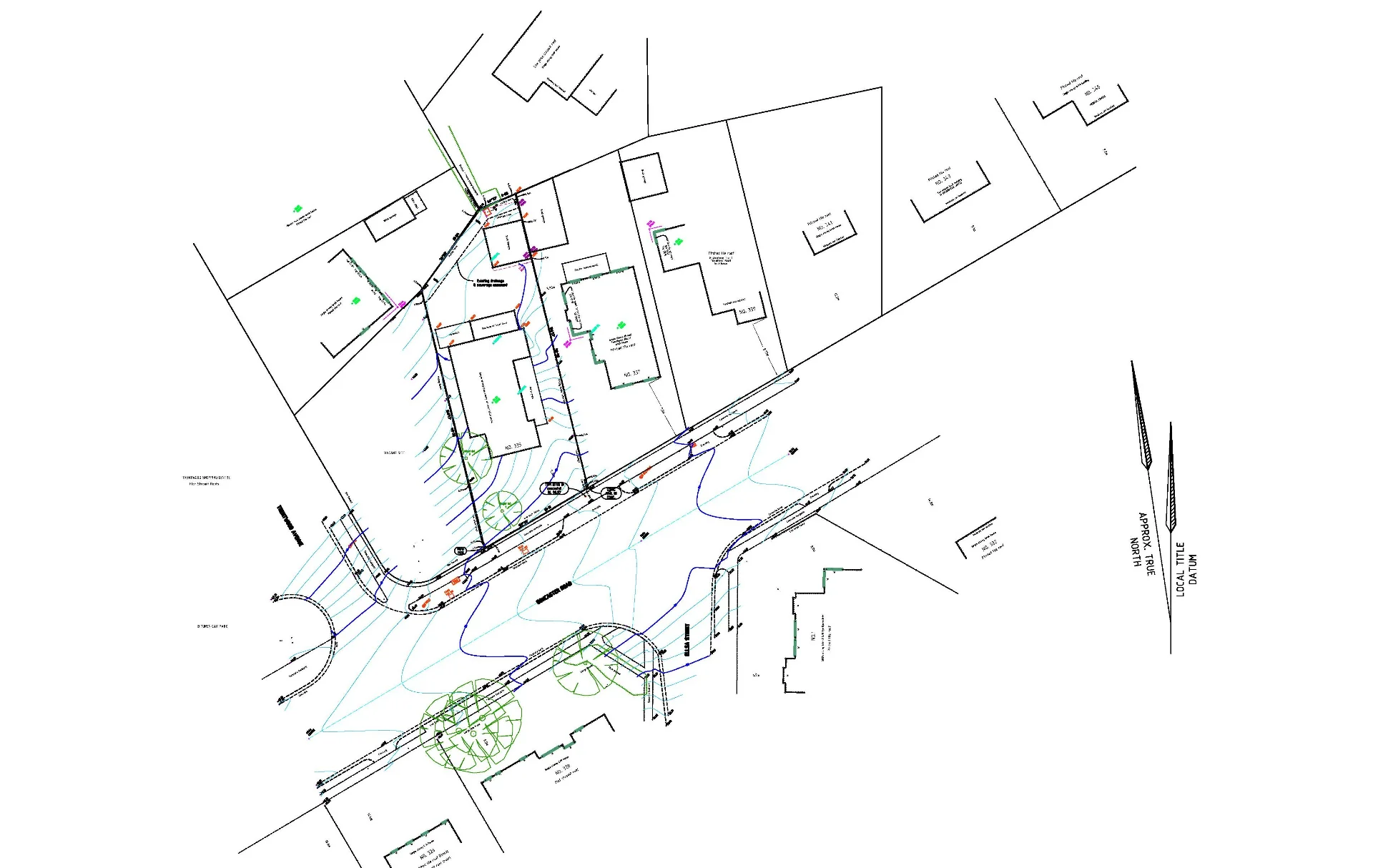
Reading a plan of subdivision is a skill in its own right. What looks like a narrow line at the rear of a lot may, in fact, be a three-metre-wide drainage easement that consumes a significant portion of the buildable area. Where development is contemplated, the plan should be overlaid on the proposed building envelope before the contract is signed.
Rights of the Dominant Owner
The holder of the dominant tenement is entitled to use the easement for the purpose for which it was granted. The right to enter the servient tenement itself is not unrestricted — it is an ancillary right, implied from the instrument creating the easement, to do what is reasonably necessary to use and maintain the easement for its stated purpose. A carriageway easement, for example, ordinarily carries an ancillary right to drive over the strip, keep it clear of obstructions and undertake reasonable maintenance of the surface — but the scope of that ancillary right is fixed by the terms of the grant, not by whatever the dominant owner later finds convenient.
The dominant owner cannot, however, increase the burden on the servient tenement beyond the scope of the original grant. A right of way granted for residential access cannot be unilaterally upgraded to service a large commercial or industrial development. A drainage easement granted for stormwater from a single dwelling does not authorise the discharge of stormwater from a multi-unit development without further consent. The English Court of Appeal decision in Jelbert v Davis [1968] 1 WLR 589 remains a useful statement of the test applied by Australian courts: intensification of use is not automatically a breach, but use that materially increases the burden on the servient tenement beyond what was contemplated by the grant will be restrained.
Obligations of the Servient Owner
The owner of the servient tenement must not substantially interfere with the easement or the easement holder's enjoyment of it. That includes not erecting fences, sheds, garages or other structures over the easement without consent; not planting trees with root systems likely to damage underground assets; and not altering ground levels in a way that interferes with drainage.
Subject to those constraints, the servient owner remains entitled to use their land for any other purpose. A drainage easement does not, of itself, prevent gardening, landscaping or paving — but the servient owner takes the risk that anything built or planted in the easement may need to be removed if the authority requires access to the underlying asset.
Building Over an Easement
Building over a drainage or sewerage easement is one of the most common issues we are asked to advise on. The short answer is: do not assume you can.
Most build-over applications require the written consent of the relevant authority — the council for drainage, and the relevant water authority for sewer. That consent typically requires detailed engineering plans, evidence that the structure will not damage the underlying asset, and execution of a build-over agreement containing indemnities in favour of the authority. Even then, the authority will usually retain the right to enter and (if necessary) demolish any part of the structure that obstructs access to the easement.
Two specific rules apply. Under regulation 130 of the Building Regulations 2018 (Vic), an application for a building permit to construct a building over an easement vested in a service authority must be accompanied by that authority's report and consent (the regulation does not apply to implied easements under the Subdivision Act 1988). Separately, section 148(1) of the Water Act 1989 (Vic) makes it an offence, without the relevant water Authority's consent, to cause or permit a structure to be built or filling to be placed on land over which an easement exists in favour of the Authority or for water supply, sewerage or drainage purposes, or within 1 metre laterally of the Authority's works (5 metres for Melbourne Water), or to remove soil or other material that supports or covers those works. The Authority may refuse consent or consent subject to conditions, and those conditions bind later owners (s 148(3), (5)). Building without the required consents can attract enforcement action, an order to remove the works, and significant issues when the property is later sold.
No registered easement does not mean no restriction. Section 148 protects an Authority's works whether or not an easement exists. Melbourne Water states that many of its critical assets have no easement and that its approval is needed for works within 5 metres of its assets; its published requirements list habitable buildings, extensions and swimming pools among structures it does not allow over its assets. Check for underground assets before designing, not only the title.
Policies differ between authorities. Frankston City Council, for example, states that habitable structures cannot be built over an easement, while other councils and water corporations assess applications case by case. Always obtain the policy and requirements of the particular authority, and check the terms and any time limits stated in a report and consent before relying on it.
Easement Disputes Between Neighbours
Disputes between neighbouring landowners about easements are common and frequently emotionally charged. Typical scenarios include:
- the servient owner erecting a fence, planter, gate or structure across a right of way;
- the dominant owner using a carriageway easement more intensively than the original grant contemplates;
- the servient owner paving or landscaping over a drainage easement and refusing to remove the works;
- disagreement about responsibility for maintenance and repair of a shared driveway or party wall;
- new construction on the servient land affecting the dominant owner's enjoyment of light, access or drainage.
The first step is almost always a clearly worded letter identifying the easement (with reference to the plan of subdivision and the dealing creating it), describing the interference, and requiring it to be remedied within a reasonable time. Many disputes resolve at this stage. Where they do not, mediation through the Dispute Settlement Centre of Victoria is often a cost-effective next step before any court application is considered.
Not every drainage dispute is an easement dispute. Where water flows from a neighbour's land and the flow is not reasonable, the person who caused it may be liable for resulting damage or loss under section 16 of the Water Act 1989 (Vic). VCAT has jurisdiction over those claims and can grant injunctions and award damages (s 19). That route can be quicker and cheaper than court proceedings.
On maintenance and repair, the instrument creating the easement should be checked first. Where it is silent, the general law position is that the dominant owner may enter to carry out repairs reasonably necessary to enjoy the easement, but is not obliged to do so, and the servient owner has no positive duty to maintain or repair the easement. A repair or cost-sharing obligation agreed between neighbours may bind only the original parties: the burden of a positive covenant does not generally run with the land unless legislation provides otherwise (for example, owners corporation rules).
Interference With Easement Rights
Substantial interference with an easement is actionable. The dominant owner may seek injunctive relief restraining the interference, an order requiring the obstruction to be removed, and damages for any loss suffered. Where the interference is ongoing and serious — for example, a permanent structure built across a carriageway easement — the Supreme Court of Victoria or the County Court of Victoria can order removal. The County Court's civil jurisdiction extends to claims and disputes regardless of the type of relief sought or the subject matter, unless excluded by legislation (County Court Act 1958 (Vic) s 37(1)(a)).
Not every interference is actionable. The test is whether the interference is substantial — whether it materially impairs the dominant owner's reasonable use and enjoyment of the easement. Minor or temporary interferences will usually not justify court intervention.
Removal, Variation and Extinguishment
Several distinct pathways exist for removing or varying an easement in Victoria.
Planning permit and section 23 of the Subdivision Act 1988 (Vic) — clause 52.02 of Victorian planning schemes requires a planning permit before a person proceeds under section 23 of the Subdivision Act to create, vary or remove an easement (and, subject to the exceptions in the clause, under section 24A or section 36). Once a permit authorises the removal or variation, a certified plan is lodged for registration, and the consent of other persons with an interest in the land is not required (section 23(2)). In deciding the permit application, the responsible authority (usually the council) must consider the interests of affected people. This is the most common route where an easement is no longer needed.
Section 36 of the Subdivision Act 1988 (Vic) — where the council or a referral authority states in writing that the economical and efficient subdivision, consolidation, servicing of or access to land requires an owner to remove a right of way or acquire or remove an easement, and that this will not result in an unreasonable loss of amenity, the owner may apply to VCAT for leave to do so compulsorily. Clause 52.02 does not require a planning permit for a section 36 proceeding where such a written statement has been given. Those with an interest in the benefited land can claim compensation under the Land Acquisition and Compensation Act 1986 (Vic) as applied by section 36(2).
Section 73 of the Transfer of Land Act 1958 (Vic) — a registered proprietor may apply to the Registrar to delete an easement from the Register where it has been abandoned or extinguished. The Registrar must notify those with an interest in the benefited land. Proof that the easement has not been used or enjoyed for at least 30 years is sufficient evidence of abandonment (section 73(3)), and any person claiming an interest in the benefited land may lodge a caveat forbidding the deletion (section 73(4)). Separately, section 73A allows the Registrar to omit a right of way over a private road or way that the applicant (and predecessors) has exclusively, continuously and adversely occupied for at least 30 years. Land Services Victoria publishes guidance on removal under sections 73, 73A and 60. Contested matters commonly end up in the Supreme Court.
Beyond the Registrar's jurisdiction under section 73, the Supreme Court of Victoria has general and equitable jurisdiction to make declarations and orders in relation to easements — for example, a declaration that an easement has been abandoned by long non-use coupled with an intention to abandon, or relief in relation to interference or extinguishment by unity of seisin. Unlike New South Wales (Conveyancing Act 1919 (NSW), section 89), Victoria does not have a direct statutory equivalent giving the court a general power to modify or extinguish an obsolete or unduly burdensome easement; the application of section 84 of the Property Law Act 1958 (Vic) to easements (as opposed to restrictive covenants) is legally contested. The absence of a clear statutory pathway was identified by the Victorian Law Reform Commission in its Easements and Covenants: Final Report 22 (2010), which recommended reform.
Removal is never automatic. It requires careful evidence, notice to all interested parties and (often) a willingness to pay compensation. Where an easement materially affects development potential, however, the cost of an application can be modest compared with the uplift in land value.
Impact on Value and Development Potential
Easements have a real and sometimes substantial effect on both market value and development potential. A drainage easement running through the centre of a small infill lot can reduce the buildable footprint, dictate the position of garages and outbuildings, and rule out features such as basements, pools and structural landscaping. A carriageway easement giving a neighbour access through the property can affect privacy, garaging and amenity. Sophisticated purchasers and lenders pay close attention to easements, and a poorly understood easement can result in a financed purchase failing at settlement.
For developers, the position of easements should be a front-of-mind consideration at the feasibility stage. The cost of a build-over consent, a planning permit to remove or vary an easement, a section 36 application to VCAT or an application under section 73 of the Transfer of Land Act 1958 (Vic) should be factored into the project budget, with realistic contingency for delay.
Due Diligence Before Purchasing Property
Pre-contract due diligence should always include a careful review of:
- the current folio of the Register and any easements recorded on it;
- the registered plan of subdivision, with easements overlaid onto the proposed building envelope;
- the section 32 vendor's statement and supporting title documents — the statement must describe any easement, covenant or similar restriction affecting the land, whether registered or unregistered, and any existing failure to comply with it (Sale of Land Act 1962 (Vic) s 32C(a));
- where development is contemplated, written advice from the relevant council and water authority about whether build-over consent is likely to be granted;
- where access is critical, a careful review of any right-of-way easements and any history of dispute about them.
If the statement contains false information or omits required information, the purchaser may be able to rescind the contract before accepting title and becoming entitled to possession (s 32K). Rescission is not available if a court is satisfied the vendor acted honestly and reasonably and ought fairly to be excused, and the purchaser is substantially in as good a position as if the Act had been complied with. Other remedies may be available depending on the facts, so act promptly and obtain advice.
These issues are far cheaper to resolve before exchange than after. Our companion guides to buying property in Victoria and selling property in Victoria set out the broader conveyancing context. For commercial property purchasers, easements affecting truck access, loading bays and sub-tenancy fit-outs warrant particular attention.
Related issues are covered in our guides to restrictive covenants, adverse possession and boundary and fencing disputes. Where a caveat has been lodged to forbid deletion of an easement under section 73(4) of the Transfer of Land Act, our guide to caveat removal in Victoria explains the related procedural framework.
When to Obtain Legal Advice
Easement issues tend to surface at the most inconvenient moments — a week before settlement, during a town-planning application, or when a neighbour erects a new fence. The right advice at the right time can be the difference between a constructive solution and an expensive dispute. Parke Lawyers advises property owners, purchasers, vendors, developers, executors and neighbouring landowners on the full range of Victorian easement issues. Our property and conveyancing practice works closely with our litigation and dispute resolution team to resolve easement disputes — through negotiation, mediation, build-over agreements, planning permit applications, applications to the Registrar under section 73 of the Transfer of Land Act 1958 (Vic), or court proceedings where necessary.
Primary Sources
- Transfer of Land Act 1958 (Vic) — ss 42(2)(d), 73, 73A
- Subdivision Act 1988 (Vic) — ss 12, 23, 36
- Property Law Act 1958 (Vic) — s 62
- Building Regulations 2018 (Vic) — r 130
- Sale of Land Act 1962 (Vic) — ss 32C, 32K
- Melbourne Water — building requirements near assets
- Water Act 1989 (Vic) — s 148
- County Court Act 1958 (Vic) — s 37
- Victoria Planning Provisions, clause 52.02
- Westfield Management Ltd v Perpetual Trustee Co Ltd (2007) 233 CLR 528; [2007] HCA 45
- Victorian Law Reform Commission, Easements and Covenants: Final Report 22 (2010) — ch 4 (implied and prescriptive easements)
- Land Use Victoria, Customer Information Bulletin 222 — Guide to Removal of Easements
Frequently Asked Questions
What is an easement on Victorian property?
An easement is a proprietary right that allows the owner of one parcel of land (the dominant tenement) to use, or restrict use of, another parcel of land (the servient tenement) for a defined purpose — most commonly drainage, sewerage, access, or the passage of utilities such as water, gas, electricity or telecommunications. An easement runs with the land, binds successive owners, and is usually recorded on the certificate of title and the relevant plan of subdivision.
How do I find out whether my property has an easement?
Easements are generally disclosed on the register kept by Land Services Victoria. They will appear on the folio of the Register, on the registered plan of subdivision and (where relevant) on the section 32 vendor's statement. A current title search, plan of subdivision and a careful read of the section 32 statement should reveal any registered easement. Some easements are not shown on title at all. Section 42(2)(d) of the Transfer of Land Act 1958 (Vic) preserves “any easements howsoever acquired” affecting the land, and section 12(2) of the Subdivision Act 1988 (Vic) implies easements for support, services (including drainage and sewerage), rights of way, light and overhanging eaves where reasonably necessary — over subdivisions of a building, land affected by an owners corporation, or land on a plan that says section 12(2) applies. Implied and prescriptive easements can therefore bind a purchaser without appearing on the folio, which is one reason a physical inspection and careful pre-purchase enquiry are essential.
What are the most common easements in Victoria?
The most common are drainage easements (often in favour of the local council or a water authority), sewerage easements in favour of the relevant water authority (such as Yarra Valley Water, South East Water or Greater Western Water), carriageway and right-of-way easements giving a neighbour vehicular or pedestrian access, and utility easements for the supply of electricity, gas, water or telecommunications. Easements for support, light and air also exist but are less common in modern Victorian subdivisions.
Can I build over an easement?
It depends on the wording of the easement and on the position of the relevant authority. Building over a drainage or sewerage easement generally requires the written consent of the council or water authority, and some authorities do not allow habitable buildings over easements or assets at all. Under regulation 130 of the Building Regulations 2018 (Vic), a building permit to build over an easement vested in a service authority requires that authority's report and consent, and section 148 of the Water Act 1989 (Vic) separately prohibits, without the water authority's consent, building or placing fill on land subject to an easement in favour of the authority or for water supply, sewerage or drainage, or within 1 metre of its works (5 metres for Melbourne Water) — even where no easement is registered. Building without the required consents risks enforcement action, an order to remove the works and significant cost.
What rights does the holder of an easement have?
The holder of the dominant tenement is entitled to use the easement for the purpose for which it was granted, and to enter the servient tenement to a reasonable extent to enjoy and maintain that right. The holder cannot, however, increase the burden on the servient tenement beyond the original grant — for example, by using a carriageway easement granted for residential access to service a large commercial development.
What obligations does the owner of land burdened by an easement have?
The owner of the servient tenement must not obstruct the easement or substantially interfere with the easement holder's enjoyment of it. That includes not erecting fences, structures, planting or paving that prevent the easement being used for its intended purpose, and not altering levels in a way that interferes with drainage. The servient owner remains entitled to use their land for any purpose that does not interfere with the easement.
What can I do if a neighbour blocks or interferes with an easement?
Interference with an easement is actionable. Realistic options include a written demand identifying the easement and requiring the obstruction to be removed; mediation through the Dispute Settlement Centre of Victoria; and, if necessary, proceedings in the Supreme Court or County Court of Victoria for injunctive relief and damages. Where the real problem is stormwater flowing between properties, a claim may instead lie under section 16 of the Water Act 1989 (Vic), which VCAT can hear. Early legal advice is important because some forms of long-standing acquiescence can affect the relief available.
Can an easement be removed or varied?
Yes, but the path depends on the easement. The most common route is a planning permit under clause 52.02 of the relevant planning scheme, followed by lodging a certified plan under section 23 of the Subdivision Act 1988 (Vic). Section 36 of the Subdivision Act allows an owner, where the council or a referral authority has stated in writing that the removal is required for subdivision, servicing or access and will not cause unreasonable loss of amenity, to apply to VCAT for leave to remove the easement compulsorily. Section 73 of the Transfer of Land Act 1958 (Vic) allows a registered proprietor to apply to the Registrar to delete an easement that has been abandoned or extinguished; proof of at least 30 years' non-use is sufficient evidence of abandonment, and interested parties can lodge a caveat forbidding the deletion. The Supreme Court (and, within its jurisdiction, the County Court) can also make declarations and orders about easements, such as declarations of abandonment. Unlike some other jurisdictions, Victoria does not have a direct statutory equivalent of section 89 of the NSW Conveyancing Act 1919 giving the court a general power to modify or extinguish obsolete easements; reform in this area was recommended by the Victorian Law Reform Commission in 2010. Removal is never automatic — it requires evidence, notice to interested parties and, under section 36, compensation.
How do easements affect the value and development potential of a property?
An easement can materially affect both. A drainage or sewerage easement running through the buildable area of a small lot can significantly reduce the developable footprint and frustrate plans for a new dwelling, extension or pool. A carriageway easement giving a neighbour a right of access can affect privacy, garaging and landscape design. Sophisticated purchasers — and lenders — pay close attention to easements, particularly on infill development sites.
What due diligence should I do about easements before buying property in Victoria?
Read the section 32 vendor's statement carefully — it must describe any easement affecting the land, registered or unregistered (Sale of Land Act 1962 (Vic) s 32C(a)) — obtain a current title search and a copy of the registered plan of subdivision, and overlay any easements onto the proposed building envelope. Where development is contemplated, request build-over advice from the relevant council or water authority before signing the contract. Where an easement is unclear or appears to affect the buildable area, obtain legal advice — these issues are far cheaper to resolve before exchange than after.
Can an easement be created without my agreement?
Yes. Easements can be created expressly by deed or transfer, by registered plan of subdivision, by implication (for example, an easement of necessity where land would otherwise be landlocked, or an easement implied on a plan of subdivision under section 12(2) of the Subdivision Act 1988 (Vic)), by long use (prescriptive easement) and by statute. Councils and water authorities have statutory powers to create easements over private land in defined circumstances, usually with compensation. The fact that an easement was created without the current owner's negotiation does not affect its validity.
When should I obtain legal advice about an easement?
Before signing a contract to buy land where easements appear on the title; before commencing any building work over or near an easement; if a neighbour blocks or threatens to block an easement you rely on; if you wish to apply to remove, vary or extinguish an easement; and whenever an easement materially affects your development plans. The cost of advice is almost always smaller than the cost of a dispute, a stop-work notice or a failed development application.
Property & Conveyancing
Easement issue affecting your property or development? Talk to Parke Lawyers.
Parke Lawyers advises property owners, purchasers, vendors, developers and neighbouring landowners on Victorian easement issues — including build-over consents, neighbour disputes, interference claims, planning permit and Subdivision Act 1988 (Vic) applications, and applications under section 73 of the Transfer of Land Act 1958 (Vic) to remove, vary or extinguish easements that constrain the use of your land.
This article is general information only and does not constitute legal advice. Please obtain advice tailored to your circumstances.