
Information Centre · Property & Conveyancing
Adverse Possession in Victoria: Can You Claim Ownership of Land?
Adverse possession is a long-established doctrine in Victorian property law under which long, exclusive and unchallenged occupation of another person's land may, after the statutory limitation period, support an application to be registered as the owner. This guide explains how the doctrine operates, its limits and the application process — outcomes always depend on the evidence.
Key points
- Adverse possession in Victoria operates through the Limitation of Actions Act 1958 (Vic) — section 8 bars the paper owner's action to recover land after 15 years, and section 18 extinguishes the paper title at the end of that period.
- Expiry of the limitation period does not, of itself, alter the Register or vest a new registered interest; registration as proprietor requires a separate application to Land Services Victoria under the Transfer of Land Act 1958 (Vic), and registration is not automatic.
- A claimant must establish factual possession appropriate to the character of the land and an intention to possess to the exclusion of all others including the paper owner; hostility toward, or a subjective belief about title against, the paper owner is not required, and no single act (fencing, paying rates, keys, maintenance) is by itself conclusive.
- Adverse possession cannot be claimed against Crown land (Limitation of Actions Act 1958 (Vic) s 7), land of Victorian Rail Track (s 7A), land of a water authority within the meaning of the Water Act 1989 (Vic) (s 7AB), council land of which a municipal council is the registered proprietor (s 7B), or common property of an owners corporation from possession by another lot owner (s 7C); whether it is available against any other public or statutory authority depends on the particular land, owner and governing legislation.
- Whole-of-title claims and part-parcel or boundary claims follow different pathways at Land Services Victoria; part-parcel and boundary applications typically require a licensed surveyor's plan and supporting statutory declarations, and contested matters may be referred to the Supreme Court of Victoria.
- Purchasers, vendors and owners should investigate any discrepancy between occupation or fence lines and the registered title before contracting; a licensed survey and title-specific legal advice may be appropriate because unresolved discrepancies can affect the transaction or lead to later disputes.
A client commissions a re-establishment survey before demolishing the rear fence of a long-held family property in inner Melbourne. The surveyor pegs the true boundary and delivers an awkward finding: the existing fence, first erected in the late 1970s, sits seventy centimetres inside the neighbour's title. For nearly fifty years the family has mowed, gardened, paved and used the strip as its own. The neighbour has never set foot on it. The question, asked quietly across the kitchen table, is the same one Victorian property lawyers have heard for generations: who owns the strip?
Adverse possession is the doctrine that answers that question. It allows a person who has occupied another person's land openly, exclusively and continuously for at least 15 years to apply to be registered as the legal owner of that land. It is a doctrine the common law has recognised for centuries and one Victorian statute has preserved with care. It is also one of the most consequential — and most under-appreciated — features of Victorian property law.
This article explains what adverse possession is, how it works under the Limitation of Actions Act 1958 (Vic) and the Transfer of Land Act 1958 (Vic), the three elements a claimant must establish, how fencing disputes and boundary encroachments are resolved, the limits that protect Crown and council land, the application process through Land Services Victoria, the evidence that supports a successful claim, and the risks for purchasers and owners. It is general information only and does not constitute legal advice.
What Adverse Possession Is
Adverse possession is the doctrine under which the expiry of the statutory limitation period bars the paper owner's action to recover land and extinguishes the paper owner's title in respect of the land possessed adversely. It is not a defence to a trespass action and it is not a licence to occupy land. Extinguishment of the paper title does not, of itself, alter the Register or vest a new registered interest in the long-term occupier — that requires a separate application to Land Services Victoria under the Transfer of Land Act 1958 (Vic).
In Victoria the doctrine operates through the interaction of two statutes. Section 8 of the Limitation of Actions Act 1958 (Vic) bars an action to recover land after 15 years from the date the right of action accrued, and section 18 extinguishes the paper owner's title at the end of that period. The Transfer of Land Act 1958 (Vic) and current Land Services Victoria practice then provide the process by which the long-term occupier may apply to be registered as the proprietor of the land. Registration is not automatic and remains subject to the Registrar's consideration, notice to interested parties and any objection or referral to the Supreme Court.
The Historical Basis
Adverse possession traces its lineage to the medieval common law and to limitation statutes dating back to the sixteenth century. The doctrine reflects two long-standing policy objectives. The first is the prevention of stale claims — the law has always been reluctant to disturb long-established arrangements on the strength of evidence that may be decades old and increasingly difficult to test. The second is the productive use of land — where land has been used productively for a long period of time by a person whom everyone has treated as its owner, the law prefers to recognise that reality rather than disturb it.
Both objectives remain alive in Victorian property law today. The doctrine continues to apply to land under the Torrens system (with adjustments) and remains an important mechanism for resolving long-standing fencing errors, boundary encroachments and historical occupation anomalies.
Possession Versus Ownership
Ownership is what the certificate of title records. Possession is what is happening on the ground. Most of the time the two are aligned, but they can come apart in important ways:
- A tenant has lawful possession but not ownership. Possession with the owner's consent does not count for adverse possession purposes.
- A trespasser has no lawful right to be on the land — but if the trespass is open, exclusive and continuous for 15 years and the owner does nothing, the trespasser's possession may ripen into ownership.
- A long-standing occupier who honestly believed the land was theirs — for example, because of a misplaced fence — can also acquire title, even though they never intended to trespass.
Adverse possession is concerned with possession that is adverse to the paper owner's title — that is, possession without consent and inconsistent with the owner's title. Whether the possession is innocent or deliberate is largely beside the point.
The 15-Year Limitation Period
The key statutory provision is section 8 of the Limitation of Actions Act 1958 (Vic), which bars actions to recover land after 15 years from the date on which the right of action accrued. The right of action generally accrues when the paper owner is dispossessed or discontinues possession. Once the 15-year period expires, section 18 extinguishes the owner's title altogether.
Possession by successive occupiers can sometimes be added together — "tacked" — to make up the 15 years. Tacking requires a clear chain of dispossession passing from one occupier to the next, usually through a sale of the adjoining property where the disputed strip was treated (informally) as part of what was sold. Gaps in possession, or periods where the paper owner re-enters, break the chain and reset the clock.
Time does not run against persons under a disability (minors, persons with impaired capacity) until the disability ends, and statutory protections apply to Crown and certain public lands (see below).
The Three Elements
Three elements must coexist, continuously, for the entire 15-year period:
1. Factual Possession
The claimant must have physical control of the land of a kind appropriate to its nature and character. For a suburban backyard, factual possession typically involves fencing, mowing, gardening, paving, building structures and using the land as part of everyday life. For rural land, it involves fencing, grazing, cropping, maintaining boundaries and excluding livestock and people from adjoining holdings. The acts must be visible and unequivocal — secret, sporadic or trivial use will not do.
2. Intention to Possess
The claimant must intend to possess the land in their own name and on their own behalf, to the exclusion of all others so far as is reasonably practicable — including the paper owner. Hostility toward, or a subjective belief about title against, the paper owner is not required; a claimant who honestly believed the strip in dispute already belonged to them can nevertheless establish the necessary intention. The intention is judged from the outward acts of possession: fences, gates, locks, structures, planting and the way the land has actually been treated. No single act (whether fencing, paying rates, holding keys or maintenance) is by itself conclusive; the evidence is weighed cumulatively.
3. Absence of Consent
Possession with the paper owner's permission is fatal to an adverse possession claim. Permission can be express ("yes, you can use the strip") or implied (an arrangement between long-standing neighbours that one will mow the other's verge, for example). Payment of rent, however informal, is also inconsistent with adverse possession. A successful claim requires possession that is, throughout the 15-year period, without any form of consent from the owner.
Continuous Possession
Continuity is judged by reference to what is reasonable for the type of land in question. A suburban backyard does not need to be in continuous use 24 hours a day, seven days a week — but it should be fenced, maintained and outwardly treated as part of the claimant's property throughout the relevant period. A short holiday or quiet period will not break continuity. A re-entry by the paper owner, an acknowledgment of the owner's title (for example, in correspondence), or an agreement that the occupier holds the land with the owner's consent, will interrupt the running of time.
Exclusive Possession
Exclusivity is the difference between using land and possessing it. Acts that are consistent with shared use, casual use or use by permission do not satisfy the requirement. Acts that signal an intention to exclude others — fences, locked gates, structures, refusal of entry, dealing with the land as if it were one's own — do. Exclusivity is most clearly demonstrated where the claimant has physically enclosed the land and treated the enclosure as the practical boundary of their property.
Fencing Disputes
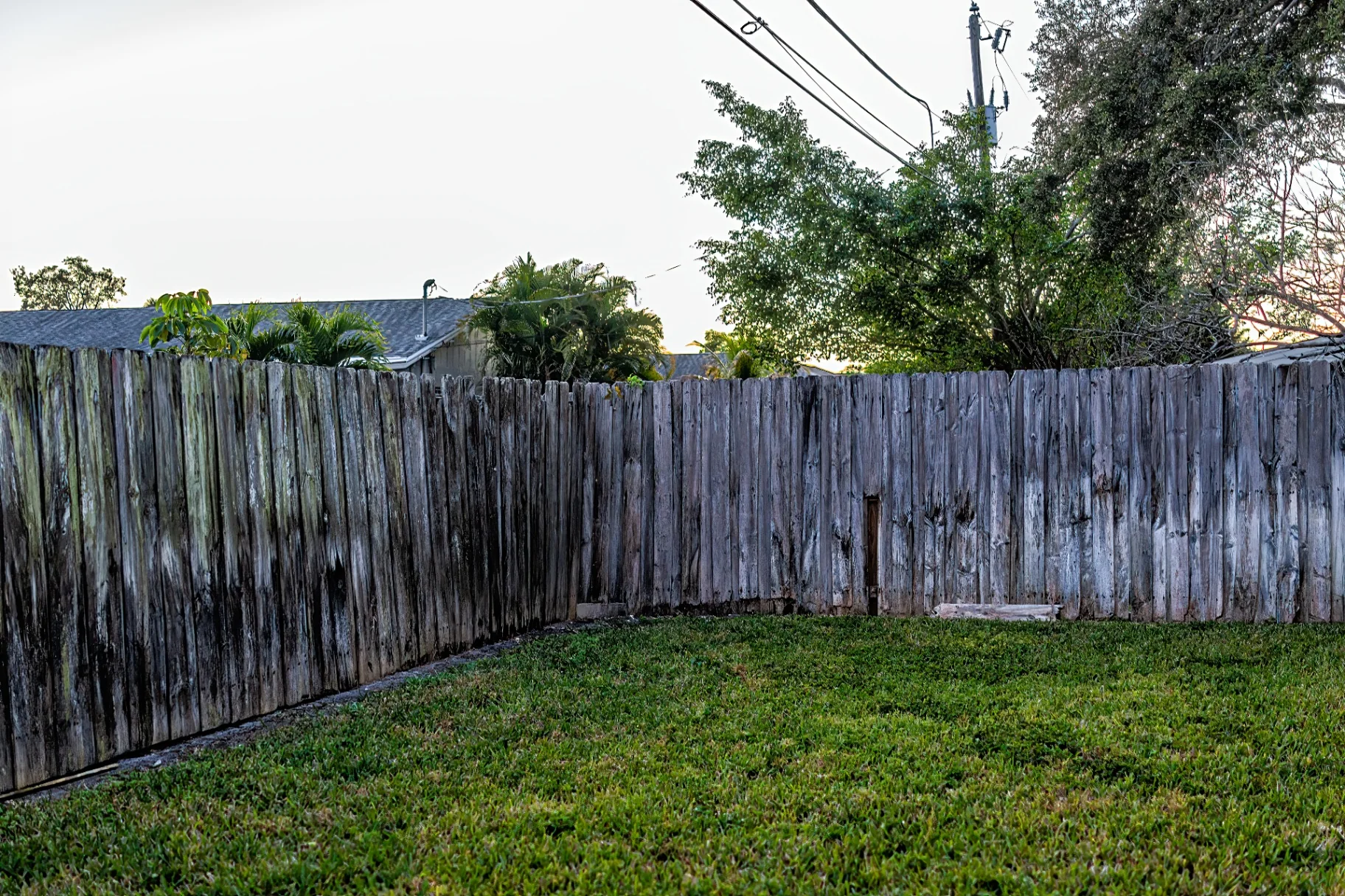
Fencing disputes are a frequent source of adverse possession claims in Victoria. The pattern is familiar. Two adjoining suburban lots were fenced decades ago, sometimes without a contemporary survey. Over time, owners have come and gone, fences have been replaced like-for-like, and any original error may have been forgotten. A re-establishment survey today reveals that the fence sits some distance on one side of the true title boundary.
Whether the encroaching owner can establish adverse possession over the disputed strip depends on the same three elements applied to the whole of the evidence. Relevant questions include how long the fence has stood in its current position, whether the encroaching owner has used the strip as their own throughout the relevant period and whether the paper owner has at any point consented to that use. Outcomes cannot be predicted from the fact of long occupation alone; each case turns on its evidence.
Boundary Encroachments
Boundary encroachments by structures — eaves, retaining walls, garages, garden beds, paving, outbuildings — raise the same issues. Where a structure has stood across a title boundary for 15 years and the encroaching owner has treated the encroached strip as their own, the doctrine can be engaged. The Building Act 1993 (Vic), the Fences Act 1968 (Vic) and the body of law around encroachment and nuisance also affect how a dispute is ultimately resolved, but a long-standing encroachment may, in substance, already belong to the encroacher.
Rural Land Examples
On rural land, the typical fact pattern is a fence that has, for decades, included a strip of the neighbour's paddock within one farmer's run. The strip is grazed, cropped or laid down to pasture as if it were part of the larger holding. Boundary repairs, gates, water troughs and stock movement all reinforce the impression of ownership. Where this state of affairs has continued for 15 years without challenge by the paper owner, the elements of adverse possession may well be made out — although the quality of the surveyor's evidence and aerial photography tends to do much of the heavy lifting on rural claims.
Residential Land Examples
On residential land, common scenarios include: a strip between two houses paved over by one owner as a side walkway; a corner of a rear garden enclosed by a fence that wraps slightly into the neighbour's title; a laneway-end "bowling green" absorbed into a back garden and used for vegetable beds and a clothesline; a garage built across the boundary in the 1970s and treated as part of the dwelling ever since. Each can found an adverse possession claim if the elements are made out over the relevant period.
Land That Cannot Be Acquired by Adverse Possession
The doctrine does not extend to every parcel. Section 7 of the Limitation of Actions Act 1958 (Vic) preserves the position of the Crown, so Crown land cannot be acquired by adverse possession. Section 7A of that Act protects the title of Victorian Rail Track, section 7AB protects land of an Authority within the meaning of the Water Act 1989 (Vic) (water authorities), and section 7B protects land of which a municipal council is the registered proprietor under the Transfer of Land Act 1958 (Vic). Section 7C of the Limitation of Actions Act 1958 (Vic) protects common property of an owners corporation from adverse possession by another lot owner. For any other public body or statutory authority, whether adverse possession is available depends on the particular land, the identity of the owner and the governing legislation; the precise statutory position and title must be verified in every case before a claim is considered.
Where a claim involves what looks like a disused public laneway, the threshold question is always who owns it. A search of the relevant title and the council's records will reveal whether the laneway is in private ownership, council-vested, held by a statutory authority or unalienated Crown land. The legal pathway is different in each case.
Adverse Possession Applications Through Land Services Victoria
Where the elements are made out, an application for possessory title is made to the Registrar of Titles at Land Services Victoria under the Transfer of Land Act 1958 (Vic) and current Land Services Victoria practice. Whether the application concerns the whole of a folio or only part of a parcel (typically a boundary strip) affects the plans, supporting evidence and process. Part-parcel and boundary applications generally require a plan prepared by a licensed surveyor identifying the disputed land, together with an abstract of field records; whole-of-title applications require different supporting material. The current Land Services Victoria guides should be followed on each element.
Applications are commonly supported by:
- An application to be registered as proprietor.
- A licensed surveyor's plan identifying the disputed land, where required for a part-parcel or boundary claim.
- Statutory declarations from the claimant addressing each element of adverse possession across the full 15-year period.
- Corroborating statutory declarations from neighbours, former owners, tradespeople and any other person who can speak to the historical use of the land.
- Documentary evidence — rates notices, water bills, insurance records, photographs and invoices for fences or improvements.
- A covering legal submission addressing each element on the evidence.
The Registrar gives notice to the paper owner, any mortgagees and other interested parties in accordance with current requirements, and considers any objections. The Registrar may accept, reject or require further evidence on an application; registration is not guaranteed and is not automatic on expiry of the limitation period. A caveator may lodge a caveat to protect a claimed possessory interest pending determination. If an objection cannot be resolved administratively, the matter may be referred to, or determined by, the Supreme Court of Victoria.
Evidence Required
Successful adverse possession applications are evidence-heavy. The Registrar (and, if it comes to it, the Court) will not accept assertion alone. The strongest applications combine:
- Surveyor's evidence — a registered surveyor's plan showing the disputed strip, the true title boundary, the position of the fence and any structures, and (where possible) the approximate date the fence was erected.
- Statutory declarations — from the claimant, neighbours (preferably long-standing), former owners, tradespeople and anyone else who can speak from direct experience to the use of the land over the relevant period.
- Historical aerial photography — often obtained from Landata, the State Library of Victoria, or specialist suppliers — showing the fence in position across multiple decades.
- Documentary records — rates notices, water bills, insurance policies, photographs, correspondence and invoices for fencing, paving, landscaping and structures on the disputed land.
Objections and Disputes
The paper owner, a mortgagee, an adjoining owner or any other person with an interest can object to an adverse possession application. Objections may take the form of:
- An assertion that consent was given at some point during the 15-year period.
- Evidence of re-entry, acts of possession or acknowledgments by the claimant that break the chain of adverse possession.
- A challenge to the surveyor's evidence or the date the fence was erected.
- An argument that the relevant land is not capable of adverse possession (e.g. Crown or council land).
- A counter-claim in trespass, encroachment or nuisance, or a cross-application by the paper owner for orders that the encroaching structure be removed.
Where an objection is lodged that cannot be administratively resolved, the matter is referred to the Supreme Court of Victoria for determination.
Supreme Court Proceedings
Contested adverse possession claims are heard in the Supreme Court of Victoria, generally in the Property List of the Common Law Division. The Court receives evidence on the elements of adverse possession, weighs the competing cases, and makes orders — either confirming or refusing possessory title, or making consequential orders for boundary adjustments, removal of encroaching structures, compensation or costs. The costs consequences for the losing party can be significant; early legal advice and careful evaluation of the evidence are essential before litigation is commenced.
Mediation — through the Court-annexed mediation programs, private mediators or the Dispute Settlement Centre of Victoria for less complex matters — resolves many adverse possession disputes before final hearing. The negotiated outcomes (boundary adjustments, deeds of agreement, survey-driven realignments) are often cheaper, faster and more durable than a contested judgment.
Risks for Purchasers and Owners
For paper owners, the principal risk is the silent erosion of title. A fence in the wrong place for two decades, a structure that has crept across a boundary, a laneway absorbed into the neighbour's garden — all may already belong to the neighbour by operation of law. Once the 15-year period has expired, recovering the land is no longer a question of asserting paper title; it is a question of disproving the elements of adverse possession in court.
For purchasers, the risks cut both ways. Buying a property whose fences sit inside the title boundary may mean buying less land than the title suggests — with consequences for buildable area, marketability and value. Buying a property whose fences sit outside the title boundary may mean buying a developing adverse possession problem against the neighbour. In both scenarios, an identification survey before exchange is cheap insurance against a much more expensive surprise after settlement.
For developers, the risks are particularly acute. Adverse possession over a strip of a small infill site can frustrate setbacks, frontages and building envelopes that the feasibility analysis depended on. Discovery late in a project — typically when the surveyor pegs out the slab — is materially more expensive than discovery before exchange.
Practical Steps When a Boundary Issue Is Discovered
- Obtain a current title search and the registered plan of subdivision for the affected land.
- Commission a registered surveyor to undertake a re-establishment or identification survey, with instructions to identify the fence line, the true boundary, and any structures crossing the boundary.
- Obtain legal advice before raising the issue with the neighbour. The position you adopt at the outset tends to anchor the negotiation.
- Consider the realistic options: a negotiated boundary adjustment, a deed of agreement, an application for possessory title to Land Services Victoria, an exchange of land, or proceedings in the Supreme Court of Victoria.
- Avoid unilateral action. Moving a fence, removing a structure, building over the disputed strip or asserting entry before the legal position is clear can prejudice your position and expose you to a counter-claim in trespass, encroachment or nuisance.
- Address the issue early. Boundary disputes age badly — evidence is harder to gather, neighbours move on, and the cost of resolution rises sharply once the matter is before the courts.
How Parke Lawyers Can Help
Parke Lawyers advises Victorian property owners, purchasers, vendors, executors, developers and adjoining landowners on adverse possession claims, boundary disputes, fencing issues and possessory title applications. Our practice combines property and conveyancing advice with litigation and dispute resolution experience, so we can move a matter from survey to negotiation, to Land Services Victoria application, to Supreme Court proceedings as the situation requires.
If you are dealing with a boundary issue, a fencing dispute or a title irregularity, our related guides on easements on Victorian property, caveat removal in Victoria, buying property in Victoria and selling property in Victoria may also be useful background reading.
Frequently Asked Questions
What is adverse possession in Victoria?
Adverse possession is a common law doctrine, preserved by the Limitation of Actions Act 1958 (Vic) and the Transfer of Land Act 1958 (Vic), under which a person who has occupied another person's land openly, exclusively and without the paper owner's consent for the full statutory limitation period may apply to be registered as the owner of the land. Expiry of the limitation period bars the paper owner's cause of action to recover possession; registration as owner requires a separate application to Land Services Victoria and is not automatic.
How long is the limitation period?
The relevant limitation period in Victoria is 15 years under section 8 of the Limitation of Actions Act 1958 (Vic). Possession must be continuous for that period. Where possession passes in an unbroken chain from one occupier to a successor, the periods may in some circumstances be added together ("tacking") if the requirements are met.
What must a claimant prove?
A claimant must establish, on the evidence and for the full limitation period: factual possession — physical control of the land of a kind consistent with the way the land can reasonably be used; intention to possess — an intention to exclude all others, including the paper owner, so far as is reasonably practicable; and the absence of the paper owner's consent throughout the period. Each element is assessed on all the circumstances; no single fact is conclusive.
What counts as open, continuous and exclusive possession?
Possession must be open (not concealed), peaceable, exclusive of the paper owner and others, and consistent with the character of the land. On a suburban block that may involve fencing, gardening, paving and everyday use of the disputed area as if it were the claimant's own. On rural land it may involve fencing, grazing, cropping and maintenance of boundaries and access. Payment of rates, or a fence alone, is not by itself conclusive; the Court looks at all the evidence.
Can adverse possession be based on a fence in the wrong place or a boundary encroachment?
It can. Boundary claims arise where a fence, wall, garage, eaves or garden bed has for the limitation period sat on land on one side of the true title boundary and the occupier has used that land as their own. The occupier may be entitled to apply for possessory title over the encroached strip. The Building Act 1993 (Vic) and Fences Act 1968 (Vic) also apply to boundary and fencing disputes.
Can adverse possession be claimed against Crown, council or other protected land?
No, in the categories the Limitation of Actions Act 1958 (Vic) specifies. Section 7 preserves Crown land. Section 7A protects land of Victorian Rail Track; section 7AB protects land of an Authority within the meaning of the Water Act 1989 (Vic) (water authorities); and section 7B protects land of which a municipal council is the registered proprietor. Section 7C of the same Act protects common property of an owners corporation from adverse possession by another lot owner. For any other public body or statutory authority, whether adverse possession is available depends on the particular land, the owner and the governing legislation, and must be checked in each case.
How is an adverse possession application made?
Applications are made to the Registrar of Titles at Land Services Victoria under the Transfer of Land Act 1958 (Vic) and current Land Services Victoria guidance. The application is supported by a registered surveyor's plan identifying the disputed land, statutory declarations from the claimant and supporting witnesses, and documentary evidence of the period of occupation. The Registrar gives notice to the paper owner and other interested parties and any objection may need to be resolved by the Supreme Court of Victoria.
What evidence supports an application?
Applications are typically supported by a registered surveyor's plan and identification of the disputed area; statutory declarations by the claimant covering the full period of possession; corroborating declarations from neighbours, prior owners and tradespeople; historical aerial photographs; rates, water and insurance records; and dated photographs and invoices for any works undertaken on the disputed area.
What happens if the paper owner objects?
If the paper owner or another interested party lodges an objection, the Registrar generally will not determine the application administratively and the matter may need to be resolved in the Supreme Court of Victoria. The Court considers the evidence and applies the elements of adverse possession. Costs consequences can be significant for the unsuccessful party. Outcomes turn on the evidence and cannot be guaranteed.
What practical steps should I take if I discover a boundary issue?
Obtain a current title search and registered plan of subdivision; commission a registered surveyor to complete a re-establishment survey; obtain legal advice before raising the issue with the neighbour; consider whether the position supports negotiation, a deed, a boundary adjustment, an application for possessory title, or Court proceedings; and avoid unilateral action such as moving a fence, removing a structure or building over the disputed area before the legal position is clear.
Property & Conveyancing
Boundary dispute or title issue? Talk to Parke Lawyers.
Parke Lawyers advises property owners, purchasers, vendors, executors, developers and adjoining landowners on Victorian adverse possession claims, fencing and boundary disputes, encroachments, possessory title applications to Land Services Victoria and proceedings in the Supreme Court of Victoria. We resolve title irregularities before they disrupt a sale, a development or a family arrangement.
This article is general information only and does not constitute legal advice. Please obtain advice tailored to your circumstances.