
Information Centre · Criminal & Traffic Law
Victorian Proof of Age Cards, Photo ID and Fake ID Laws
How to actually get a Victorian Proof of Age card, what identification Victorian venues accept, how digital driver licences are treated, when identification can lawfully be confiscated, and what the different kinds of “fake ID” really risk.
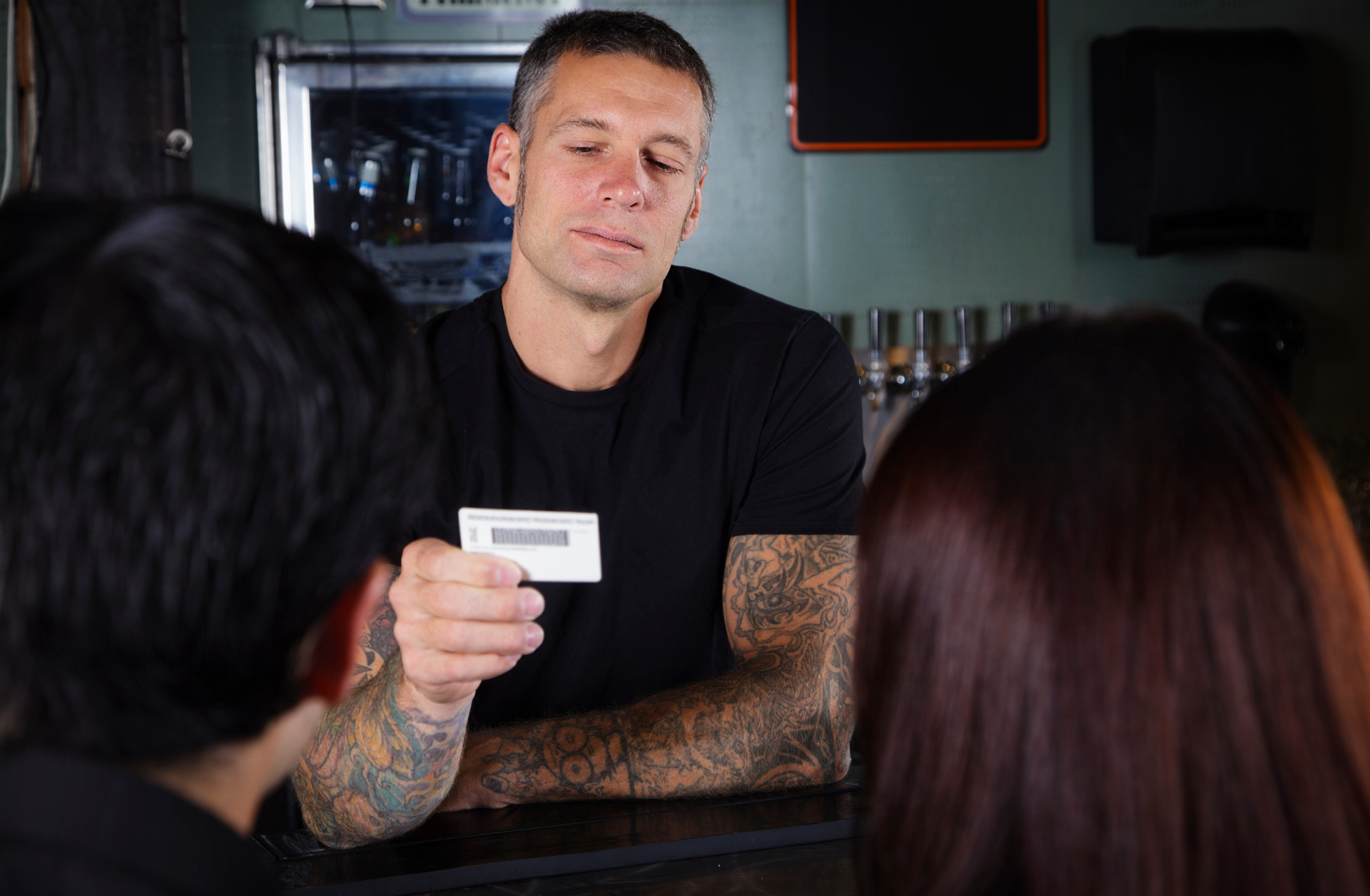
Key points
- A Victorian Proof of Age card is a Victorian Government photo card administered by Liquor Control Victoria. It proves age; it does not authorise driving, and every organisation and regulated identity process sets its own document requirements.
- Applications are made on a paper form, not online: collect the form from a participating VicRoads office, Australia Post outlet or selected pharmacy (or request it from Liquor Control Victoria), then lodge it in person at a participating photo-point agency with original Category A and Category B documents.
- You may apply once you are over 17 years and 11 months old, but cannot use the card as evidence of age until you turn 18. A referee who has known you for at least 12 months and is on the Australian electoral roll must sign the declaration, and your own declaration must be signed before an authorised person.
- Official guidance current at 24 September 2026 estimates delivery 20 to 25 business days after lodgement. Errors are corrected free within 30 days of issue; a replacement can be requested within three months of issue; an older card generally requires a fresh application.
- At Victorian licensed venues, accepted evidence of age is an Australian driver licence (physical or digital), a Victorian learner permit (physical or digital), a foreign driver licence with an accredited translation or International Driving Permit where it is not in English, a Victorian or interstate proof of age card (physical or digital), a Keypass card, an Australian or foreign passport, or a Victorian marine licence.
- Australian digital driver licences displayed live in the official government app — including New South Wales, Queensland and South Australian licences — are acceptable evidence of age in Victoria. A screenshot, photograph or forwarded image is not a live credential, and staff may ask for another acceptable document if a scanner is not working.
- Checking anyone who appears under 25 is official risk-management guidance and standard practice, not a freestanding statutory command. The Act prohibits supplying liquor to a minor and gives the licensee a defence under ss 119(6) and 120(4) where they had seen an evidence of age document indicating the person was 18 or over.
- Under s 127 of the Liquor Control Reform Act 1998 (Vic) a document other than a driver licence may be seized only on a reasonable belief that it is not the producer's, contains false or misleading name or age information, has been forged or fraudulently altered, or is being used in contravention of the Act. Venue staff who seize a document must give it to a police officer, and a seized document must be returned within 28 days unless one of those grounds applies.
- Driver licences are excluded from s 127: a physical driver licence may be confiscated only where staff are absolutely sure it is not genuine, so a genuine licence borrowed from another person cannot be confiscated under that rule, and a fake digital licence cannot be physically confiscated at all.
- "Fake ID" spans very different regimes: ss 123, 124, 125 and 126 of the Liquor Control Reform Act 1998 (Vic), ss 71 and 72 of the Road Safety Act 1986 (Vic) for licence documents, ss 81, 82 and 83A of the Crimes Act 1958 (Vic) for deception and falsification, and Commonwealth passport and identity-crime offences. The exact charge determines the penalty and consequences.
- At the 2026–27 penalty unit value of $209.10, court maxima include 5 penalty units ($1,045.50) under s 123 for a minor, 15 penalty units ($3,136.50) under s 126(4) for false particulars, and 20 penalty units ($4,182) under ss 124 and 125. Infringement amounts are lower than court maxima, penalty units change annually, and a liquor infringement is not automatically a criminal conviction.
- Legal advice is not needed to apply for a card or after a routine refusal of service. It should be obtained promptly where police request an interview, where an infringement, charge or summons is issued, where counterfeit documents are alleged, where legitimate ID was confiscated and not handled according to law, or where a licensed venue receives regulatory correspondence.
On this page(20)
Most people arrive here with one of three questions. How do I get a Proof of Age card, and how long will it take? Will this piece of identification be accepted at the door? Or: my ID was taken, or police want to talk to my son about a card he was using — how serious is this?
It answers all three from the current Victorian legislation and Government guidance rather than the folklore that circulates about fake ID, and is general information only, not legal advice.
What the card is
A Victorian Proof of Age card is a Victorian Government-issued photo card showing the holder’s name, date of birth and photograph, administered by Liquor Control Victoria. It lets a person aged 18 or over prove their age without carrying a driver licence or passport, which matters most to adults who do not drive.
The card also has a defined status in liquor regulation. Section 3(1) of the Liquor Control Reform Act 1998 (Vic) defines an evidence of age document as a proof of age card or interstate equivalent, a driver licence or interstate equivalent, an Australian or foreign passport, or a Minister-approved photographic document enabling age to be determined. That definition drives the offence and defence provisions below.
How to apply: the real process
A common misconception is that the card is obtained online through Service Victoria in the way a licence renewal might be. It is not. The current process is a paper application lodged in person at a participating agency, because a photograph has to be taken and original documents have to be sighted.
Application checklist — current at 24 September 2026
- Check your age. You may apply once you are over 17 years and 11 months old, but you cannot use the card as evidence of age until you turn 18.
- Get the paper form. Collect it from a participating VicRoads office or Australia Post outlet or a selected pharmacy, or request one from Liquor Control Victoria by email, allowing extra time for posting.
- Gather original documents. One Category A and one Category B document, originals only — photocopies are not accepted — plus evidence of any name change.
- Have the referee declaration completed. By a person who has known you for at least 12 months and is enrolled on the Australian electoral roll.
- Sign your own declaration. In front of an authorised person from the class the law prescribes for statutory declarations.
- Attend a participating photo-point agency. Take the form and your originals, have your photograph taken and lodge the application.
The document categories. Category A documents are primary identity documents — an Australian birth certificate, a passport, or citizenship or immigration papers. Category B documents are supporting documents — a driver licence or learner permit, a Medicare card, a bank card, a Health Care Card or student identification. The lists change, so confirm them on the official application page before you attend. If your name differs from your Category A document, produce evidence of the change.
Applicants who are not citizens or permanent residents. International students, temporary visa holders, asylum seekers and people with refugee status can apply, but current official guidance requires additional documentation confirming eligibility to stay or study in Australia.
The step people underestimate is not the form; it is the originals. A birth certificate that is lost or overseas has to be sorted out before the photo-point visit, because the agency cannot lodge the application without sighting the documents.
Delivery, errors and replacements
Delivery. Liquor Control Victoria's guidance current at 24 September 2026 states 20 to 25 business days after lodgement. That is an estimate, and requesting a form by email can itself take up to two weeks before the clock starts. If the card is needed for a specific date, work backwards generously.
Errors. If the card arrives with incorrect details, return to the lodging agency within 30 days of issue and the correction is free.
Lost, damaged or changed details. Within three months of issue a replacement can be requested from Liquor Control Victoria directly. After that, the ordinary position is a fresh application — new form, new documents, new referee declaration and a new photograph. The limited replacement route is for a problem discovered soon after issue, not for a card lost years later.
What the card does not do
The card is accepted evidence of age for Victorian liquor purposes. Beyond that it is one photo document among many, and every organisation sets its own requirements.
- It does not authorise driving. It is not a licence or permit of any kind.
- It is not guaranteed acceptance. Banks, couriers, agencies, airlines, employers, property practitioners and interstate venues each decide what they accept — some readily, some only with a signature, some only in combination with other documents.
- “Recognised throughout Australia” needs a qualifier. Other states and territories issue equivalent cards and generally recognise interstate ones, but each has its own liquor legislation and each venue its own entry policy. Victorian law does not bind a Queensland nightclub.
Evidence of age is not regulated identity verification. Proving you are over 18 at a bottle shop is different from customer identification under anti-money-laundering legislation, verification of identity for land transactions, passport and citizenship applications, police checks and working-with-children checks. Those regimes set their own document standards, and some will not accept a proof of age card, or not alone. Ask the organisation in advance what it requires.
Accepted ID at Victorian venues
Current Victorian Government guidance for licensees, updated 18 August 2026, identifies the following as acceptable evidence of age. Ministerial approval under the section 3(1) definition is how learner permits, Keypass and marine licences sit alongside licences, passports and proof of age cards.
| Document | Notes |
|---|---|
| Australian driver licence | Physical card or digital licence in the official government app. |
| Victorian learner permit | Physical card or digital permit in the official app. |
| Foreign driver licence | If not in English, accompanied by an official translation from an appropriately accredited translator or by an International Driving Permit. |
| Victorian proof of age card, or interstate equivalent | Physical card or digital version where the issuing jurisdiction provides one. |
| Keypass card | Australia Post identity card. |
| Australian or foreign passport | Named expressly in the statutory definition. |
| Victorian marine licence | Accepted under current guidance. |
Two points are frequently misstated. Digital learner permits and digital proof of age cards are within the accepted forms, and leaving them off a staff training list is a common error. And the test is practical: the document must let the staff member be satisfied that it is genuine, that it belongs to the person presenting it and that the person is 18 or over. An expired document, or a photograph that no longer resembles the holder, may fail that test in fact — which is different from a rule of inadmissibility.
Digital driver licences
Australian digital driver licences displayed through official government applications are acceptable evidence of age in Victoria under current guidance. They are government-issued credentials, not a lesser substitute.
- Victoria. Victorian digital driver licences and learner permits are displayed through the relevant official Victorian applications.
- Interstate. Current guidance expressly contemplates the New South Wales and Queensland applications, and South Australia also issues a digital licence. Each has verification features — animation, holograms, refresh timestamps, scannable codes — and staff may use them.
- Live credential versus image. A screenshot, photograph, screen recording or forwarded image is not a live credential: it cannot be refreshed or verified and may have been edited. Staff should be shown the credential in the official application on the holder’s own device.
- Scanners. Where a venue scans identification and the scanner is not working, current guidance is that staff may ask for another acceptable document.
The venue’s discretion is best stated precisely. A venue cannot treat “we prefer plastic” as the law: a digital licence displayed live in the official app is acceptable evidence of age. But what drives the check is the licensee’s need to be satisfied about age and identity, so a staff member who genuinely is not satisfied may ask for additional evidence and may refuse service. The discretion concerns satisfaction on the facts, not a preference for format.
The “under 25” practice
You will often read that licensees “must check the ID of everyone who looks under 25”. That overstates the legislation, and the distinction matters.
- The prohibition. Supplying liquor to a person under 18 is an offence carrying a maximum of 120 penalty units for a licensee or permittee under section 119, and allowing a minor on licensed premises outside the exceptions carries the same maximum under section 120(1).
- The obligation. In practice the licensee must be satisfied about the age of anyone who may be under 18 before supplying liquor.
- The defence. Sections 119(6) and 120(4) provide a defence where the accused proves they had seen an evidence of age document indicating the person was 18 or over — a defence available only to a venue that actually checked.
- The practice. Checking anyone who appears under 25 is official risk-management guidance and near-universal practice, because a margin of error protects the licensee — not because the Act sets 25 as a threshold.
For patrons the practical effect is the same: expect to be asked. For licensees, preserving the statutory defence is why the practice should be applied consistently rather than left to staff discretion.
Refusal of entry or service
Staff may refuse entry or service where they are not satisfied about age or identity, and venues may refuse entry on other lawful grounds such as capacity, intoxication, dress or conduct.
A refusal is not automatically unlawful discrimination, and not automatically lawful either: treating a person adversely because of a protected attribute does not become acceptable because it happened at a door. Which proposition applies depends on the reason for the refusal.
If you are refused, the useful responses are narrow: offer another acceptable document, or supporting evidence such as a bank card in the same name, ask what would satisfy the staff member, and leave it there. Escalating can convert a service refusal into a police matter. A routine refusal is a different thing from confiscation, police involvement or genuinely discriminatory conduct — the last three are worth advice.
Confiscation: the precise rules
This is where the law is most often flattened into “they can take any ID they think is fake”. The Act and official guidance draw three distinctions.
A. Documents other than driver licences. Section 127(1) of the Liquor Control Reform Act 1998 (Vic) permits a document (except a driver licence) represented to be an evidence of age document to be seized by the person to whom it was produced, where that person is a police officer, a liquor inspector, a protective services officer on duty at a designated place, or the licensee, permittee or their employee. Section 127(2) prohibits seizure unless that person reasonably believes that:
- the person who produced the document is not the person to whom it was issued;
- the document contains false or misleading name or age information;
- the document has been forged or fraudulently altered; or
- the document is being used in contravention of the Act.
Where a document is seized by someone other than a police officer, protective services officer or liquor inspector, section 127(3) requires that person to give it to police. Under section 127(4), the officer or inspector who seized it — or a police officer given it under section 127(3) — must return it to the producer within 28 days unless one of the four grounds above applies.
B. Physical driver licences. Driver licences are expressly excluded from section 127. Official guidance states that a physical driver licence may be confiscated only where staff are absolutely sure it is not a genuine driver licence. The consequence matters: a genuine licence borrowed from a sibling or friend cannot be confiscated under that rule. Staff may instead refuse service or entry, record the incident and report the matter to police.
C. Digital driver licences. A fake digital licence cannot be physically confiscated: there is nothing to seize, and staff have no right to take, unlock, search or retain a phone. The lawful response is to refuse service or entry, record what was observed, and report the incident to police.
If your legitimate ID was taken. Do not escalate at the venue. Ask who seized it and on what ground, ask for the incident to be recorded, and follow up in writing. Section 127 obliges a venue to give a seized document to police, and police to return it within 28 days where the grounds do not hold. If a genuine document was seized and not dealt with according to law, obtain advice.
If you are the licensee. Record the ground relied on, keep the document secure, give it to police as section 127(3) requires, and record when and to whom you handed it over. Holding seized documents in a drawer indefinitely is not compliance.
The different kinds of “fake ID”
“Fake ID” spans a minor infringement at one end and serious indictable offending at the other. The legal regime, not the label, determines what happens next.
| Conduct | Likely regime | Character |
|---|---|---|
| Using another person’s genuine evidence-of-age document | Liquor Control Reform Act 1998 (Vic) ss 123, 126(4); s 124(1) for the lender | Infringement or summary offence; police may be involved. |
| Producing a genuine document containing another person’s details as your own | ss 123, 126(4); seizure under s 127 | Summary offence; the document is liable to seizure. |
| Altering or defacing a genuine document | s 124(2); Crimes Act 1958 (Vic) s 83A in serious cases | Summary offence, or indictable where falsification is charged. |
| Using or possessing a wholly counterfeit evidence-of-age card | s 124(3); Crimes Act 1958 (Vic) s 83A | Summary offence, or indictable falsification; prosecution possible. |
| Making, buying, possessing or supplying material used to produce false documents | s 124(3); Crimes Act 1958 (Vic) s 83A(5A)–(5C) | Indictable offending is realistically in play; police investigation likely. |
| False statements or false documents in a Proof of Age application | s 125(1)–(2) | Summary offence for both applicant and supplier of the material. |
| Counterfeit or fraudulently used driver licences, including digital | Road Safety Act 1986 (Vic) ss 71, 72 | Summary offences carrying a fine or short imprisonment. |
| Counterfeit passports and Commonwealth identity documents | Australian Passports Act 2005 (Cth); Criminal Code (Cth) Divs 144–145, Pt 9.5 | Commonwealth offences; investigated federally; imprisonment available. |
| Using false documents to obtain property, services or financial advantage | Crimes Act 1958 (Vic) ss 81, 82 | Indictable deception offences; materially more serious. |
The charge determines the maximum penalty, whether the matter can be dealt with by infringement or must go to court, whether imprisonment is available, whether diversion is realistically open, and any later disclosure obligation. A teenager who borrowed a sibling’s card and one who bought counterfeits online are not in the same legal position.
Offences and penalties
Official guidance summarises the position for patrons in round figures: knowingly using a fake ID to buy alcohol or enter licensed premises can attract a fine of more than $1,000, and knowingly supplying, creating or buying material used to produce evidence-of-age documents a fine of more than $4,000. The provisions, with dollar equivalents at the 2026–27 penalty unit value of $209.10 and current at 24 September 2026, are as follows.
| Provision | Conduct | Maximum |
|---|---|---|
| s 123(1) | Minor purchasing, receiving, possessing or consuming liquor, or being on licensed premises outside the exceptions | 5 penalty units ($1,045.50) |
| s 126(4) | Refusing, or giving false particulars or false evidence of, age, name or address on a lawful demand | 15 penalty units ($3,136.50) |
| s 124(1)–(3) | Giving your own evidence-of-age document to another for misuse; defacing or interfering with such a document; making or giving a false document intended for use as one | 20 penalty units ($4,182) for each limb |
| s 125(1)–(2) | False or misleading information or documents in support of a proof of age application, or supplying material for that purpose | 20 penalty units ($4,182) |
| ss 119, 120(1), 121, 122(1) | Supplying liquor to a minor; allowing a minor on licensed premises; sending a minor to obtain liquor; permitting a minor to supply liquor | 120 penalty units ($25,092) |
| Road Safety Act 1986 (Vic) ss 71, 72(1)–(2) | Obtaining a licence or permit by false statements; forging, fraudulently altering, using or lending a licence or permit document, including a digital document | 10 penalty units ($2,091) or 2 months’ imprisonment |
| Crimes Act 1958 (Vic) ss 81, 82, 83A | Obtaining property or a financial advantage by deception; making, using or possessing false documents with intent | Level 5 imprisonment (10 years maximum) |
Five qualifications matter in reading that table.
- Infringements are not court maxima.The figures above are maxima available to a court; an infringement penalty is materially lower, and courts rarely impose a maximum.
- Penalty units change. The value is set each financial year, so a dollar figure is only accurate for that year.
- Not every incident is prosecuted. Many end with a refusal of service and no further action.
- A liquor infringement is not automatically a criminal conviction. Paying an infringement penalty generally does not produce a finding of guilt. That changes if the matter goes to court and a court records one.
- Document and fraud offences are different in kind. Falsification and deception offences under the Crimes Act 1958 (Vic), and Commonwealth passport and identity offences, carry consequences including imprisonment.
If police become involved
The common advice that “you only have to give your name and address” is close to right but needs qualification.
- Name and address. Under section 126 of the Liquor Control Reform Act 1998 (Vic), police, a liquor inspector or venue staff who have reason to believe a person appearing to be under 18 has requested or consumed liquor, or is on licensed premises in contravention of the Act, may demand particulars of age, name and address. Refusing or giving false particulars carries 15 penalty units, and persistent refusal of name and address to police permits a caution and then arrest without warrant under section 126(5).
- Other requirements. Separate provisions can compel production of documents or information in particular contexts, so a blanket rule is unsafe.
- Voluntary versus compulsory. Giving particulars when lawfully required is compulsory. Participating in a recorded interview or providing a written statement is ordinarily voluntary.
- Arrest, caution and a lawyer. A person in custody must be cautioned and may communicate with a legal practitioner before questioning.
- Never lie. False particulars or a further false document create a separate, more serious problem.
- People under 18. Section 464E of the Crimes Act 1958 (Vic) requires that a person under 18 in custody not be questioned unless a parent, guardian or independent person is present, with a private communication beforehand, subject to narrow exceptions.
Get advice before any recorded interview or written statement. Our guide on what to do if police want to interview you sets out the procedure and the decisions in detail; this article does not repeat it.
Young people and parents
Parents are often the first to hear about an incident, sometimes from a venue and sometimes from police. A few things make a difference.
- Establish the stage. A refusal of service is not an infringement, an infringement is not a charge, and a charge is not a conviction.
- Keep the paper. Preserve any notice, receipt, infringement, summons, charge sheet or police correspondence, with dates, names and the venue.
- Do not coach an account. Do not coach or encourage a false account. Doing so may expose the young person and the person encouraging it to additional legal risk.
- Advice before an interview. For a person under 18 in custody, the presence of a parent, guardian or independent person is a legal requirement, not a courtesy.
- School discipline is separate. An institution may run its own process on its own timetable, and what is said there can affect a criminal matter.
Collateral consequences
Consequences are routinely overstated in both directions. What determines them is specific: the exact offence or infringement; whether there is a finding of guilt; the sentence; the wording of the disclosure question asked; and the legislation governing the particular professional, employment, visa, travel or screening decision.
So do not assume that every liquor infringement produces a criminal record, affects registration or a visa, prevents travel, appears on every police or working-with-children check, or must be disclosed to every employer. Many do none of those things. Equally, do not assume a document or fraud charge is harmless. Identify the actual offence and outcome, then check the specific disclosure obligation.
Licensee and venue compliance
For licensees, ID checking is a defence-preservation exercise. In short:
- Train staff to the accepted list, including digital learner permits and proof of age cards, and the translation requirement for foreign licences.
- View digital licences live in the official app, using the verification features. Screenshots are not credentials. If the scanner is down, ask for another acceptable document.
- Apply the under-25 practice consistently, because inconsistency creates both compliance and discrimination risk.
- Seize non-licence documents only on a section 127(2) ground; do not confiscate a physical driver licence unless absolutely sure it is not genuine; never seize or access a phone; and give seized documents to police as section 127(3) requires, recording the transfer.
- Keep incident records and preserve CCTV early, because it is usually overwritten within days.
- Avoid physical confrontation.
- Answer correspondence from Liquor Control Victoria or police accurately and on time, because answers become evidence.
Do you actually need a lawyer?
You ordinarily do not need a lawyer if
- you are applying for, correcting or replacing a Proof of Age card;
- a venue refused service because staff were not satisfied about your ID; or
- you only need to know whether a particular type of ID is accepted.
Those questions are answered by the official material linked under official sources.
Consider legal advice promptly if
- police have requested an interview;
- an infringement, charge, summons or court date has been issued;
- the allegation involves making, obtaining, supplying or using counterfeit documents;
- another person’s genuine licence or card was used;
- legitimate identification was confiscated and not handled according to law;
- a professional, employment, visa or screening disclosure question may arise; or
- a licensed venue has received regulatory correspondence, an inspection notice, enforcement action or an allegation of supplying alcohol to a minor.
Related reading
- What to do if police want to interview you — procedure, rights and decisions.
- The Magistrates’ Court in criminal and traffic matters — what happens if a charge goes to court.
- Criminal diversion in Victoria — first offences without a conviction.
- Character references for the Magistrates’ Court — how references are used on a plea.
Frequently asked questions
How do I apply for a Victorian Proof of Age card?
You apply on a paper form, not online. Collect the form from a participating VicRoads office or Australia Post outlet or a selected pharmacy, or ask Liquor Control Victoria to post one. Have the referee's declaration signed by someone who has known you for at least 12 months and is on the Australian electoral roll, sign your own declaration before an authorised person, then attend a participating photo-point agency with the form and your original identity documents to have your photograph taken and lodge the application.
What documents do I need for a Proof of Age card?
You need original documents from both Category A and Category B on the current official list — photocopies are not accepted. Category A documents are primary identity documents such as an Australian birth certificate, passport or citizenship papers; Category B documents are supporting documents such as a driver licence, Medicare card, bank card, Health Care Card or student identification. If your name differs from your Category A document, provide evidence of the name change. The lists change from time to time, so check the current official page before you attend.
Can I apply before I turn 18?
Yes. You can apply once you are over 17 years and 11 months of age, but you cannot use the card as evidence of age until you turn 18. Applying shortly before your birthday is the usual way to have the card in hand when you need it.
How long does a Proof of Age card take to arrive?
Liquor Control Victoria's current guidance states 20 to 25 business days after lodgement at a photo-point agency. That is an estimate, and requesting a form by email can itself add up to two weeks before you lodge. Plan well ahead of any date you need the card for.
What if my card is lost, damaged or has the wrong details?
If there is an error on a newly issued card, return to the agency where you lodged the application within 30 days of issue and the correction is free. If the card is lost or damaged within three months of issue, you can request a replacement from Liquor Control Victoria. After three months you generally have to lodge a fresh application.
Is a Victorian Proof of Age card accepted interstate?
Other states and territories issue equivalent cards and generally recognise interstate ones, but each has its own liquor legislation and each venue its own entry policy, and Victorian law cannot compel an interstate venue to accept it. If you are travelling, carrying a driver licence or passport as well is the practical answer.
What ID is accepted at Victorian licensed venues?
Under current Victorian Government guidance: an Australian driver licence (physical or digital), a Victorian learner permit (physical or digital), a foreign driver licence with an accredited translation or International Driving Permit where it is not in English, a Victorian or interstate proof of age card, a Keypass card, an Australian or foreign passport, or a Victorian marine licence. Staff must still be satisfied the document is genuine, belongs to the person presenting it and shows they are 18 or over.
Are interstate digital driver licences accepted in Victoria?
Yes. Current guidance treats an Australian digital driver licence displayed live in the official government application as acceptable evidence of age, and expressly refers to the New South Wales and Queensland applications as well as Victoria's own; South Australia also issues one. Staff are entitled to use each credential's verification features.
Is a screenshot of a digital licence accepted?
No. A screenshot, photograph, screen recording or image sent through a messaging application is not a live government credential — it cannot be refreshed, verified or scanned, and it may have been edited. Staff should be shown the credential live in the official application on the holder's own device. If a scanner is not working, staff may ask for another acceptable form of identification.
Must a venue check everyone who looks under 25?
Checking anyone who appears under 25 is official risk-management guidance and standard practice, not a freestanding statutory command. The legislation prohibits supplying liquor to a person under 18 and gives the licensee a defence where they had seen an evidence of age document indicating the person was 18 or over. Because the defence depends on having checked, venues apply the under-25 rule for self-protection, so expect to be asked.
Can a venue refuse my ID?
Yes. Staff may refuse entry or service where they are not satisfied about your age or identity, and venues may refuse entry on other lawful grounds such as capacity, dress or conduct. A refusal is not automatically unlawful, but it is not automatically lawful either: genuinely discriminatory conduct can still be challenged. At the venue, offer another acceptable document rather than argue.
Can a venue confiscate my ID?
A document other than a driver licence presented as evidence of age may be seized under section 127 of the Liquor Control Reform Act 1998 (Vic) by police, a liquor inspector, or the licensee, permittee or their employee, but only on a reasonable belief that the producer is not the person to whom it was issued, that it contains false or misleading name or age information, that it has been forged or fraudulently altered, or that it is being used in contravention of the Act. A seizer other than police, a protective services officer or an inspector must give the document to police, and a seized document must be returned within 28 days unless one of those grounds applies.
Can staff confiscate someone else's genuine driver licence?
No. Section 127 excludes driver licences, and official guidance permits confiscation of a physical licence only where staff are absolutely sure it is not genuine. A licence borrowed from a sibling or friend is still genuine, so it cannot be confiscated under that rule; staff can refuse service, record the incident and report it to police. A fake digital licence cannot be physically confiscated at all, and staff should not take or search a phone.
What are the penalties for using fake ID in Victoria?
It depends on the conduct. At the 2026-27 penalty unit value of $209.10, the court maximum for a minor purchasing, possessing or consuming liquor or being on licensed premises is 5 penalty units ($1,045.50) under section 123; wrongful dealing in an evidence-of-age document (section 124) and falsely procuring a card (section 125) carry 20 penalty units ($4,182); and false particulars of age, name or address on demand carry 15 penalty units ($3,136.50) under section 126. Infringement amounts are lower than court maxima. Counterfeit licences, passports, falsified documents and fraud sit under different legislation and can carry imprisonment. Figures are current at 24 September 2026 and penalty units change each financial year.
What should I do if police want to interview me about a fake ID?
Get legal advice before the interview. You may be required to give your name and address in defined circumstances, and false particulars are an offence, but there is generally no obligation to participate in a recorded interview or give a written statement. Never lie or produce further false documents. If you are under 18 and in custody, Victorian law requires a parent, guardian or independent person to be present during questioning, and you may speak privately with a lawyer first.
Official sources
- Liquor Control Reform Act 1998 (Vic) — current in-force version (ss 3, 119–127)
- Victorian Government — Get a Proof of Age card (updated 29 May 2026)
- Victorian Government — participating photo-point agencies
- Victorian Government — Checking IDs before supplying alcohol (updated 18 August 2026)
- Service Victoria — digital driver licence
- VicRoads — digital driver licence
- Road Safety Act 1986 (Vic) — current in-force version (ss 71, 72)
- Crimes Act 1958 (Vic) — current in-force version (ss 81, 82, 83A, 464E)
- Oaths and Affirmations Act 2018 (Vic) — persons authorised to witness declarations
- Australian Passports Act 2005 (Cth)
- Criminal Code Act 1995 (Cth) — forgery (Divisions 144–145) and identity crime (Part 9.5)
- Victorian Government — penalty and fee unit values (2026–27 penalty unit $209.10)
How Parke Lawyers can help
Nobody needs a lawyer to apply for a Proof of Age card. Where an allegation has been made, however, the early decisions carry most of the weight: whether to participate in an interview, how to respond to an infringement, whether diversion is realistically available, and what a young person should not say.
Parke Lawyers’ criminal and traffic law team advises young adults, parents and licensed venues on police interviews and infringements, charges involving false or altered documents, and regulatory correspondence about ID checking and underage supply. Early advice is usually cheaper and more effective than advice after an interview.
Criminal & Traffic Law
An ID allegation is easiest to deal with before the interview.
Parke Lawyers advises young adults, parents and licensed venues on police interviews, infringements, charges involving false or altered documents, and regulatory correspondence about ID checking and underage supply.
This article is general information only and does not constitute legal advice. Please obtain advice tailored to your circumstances.